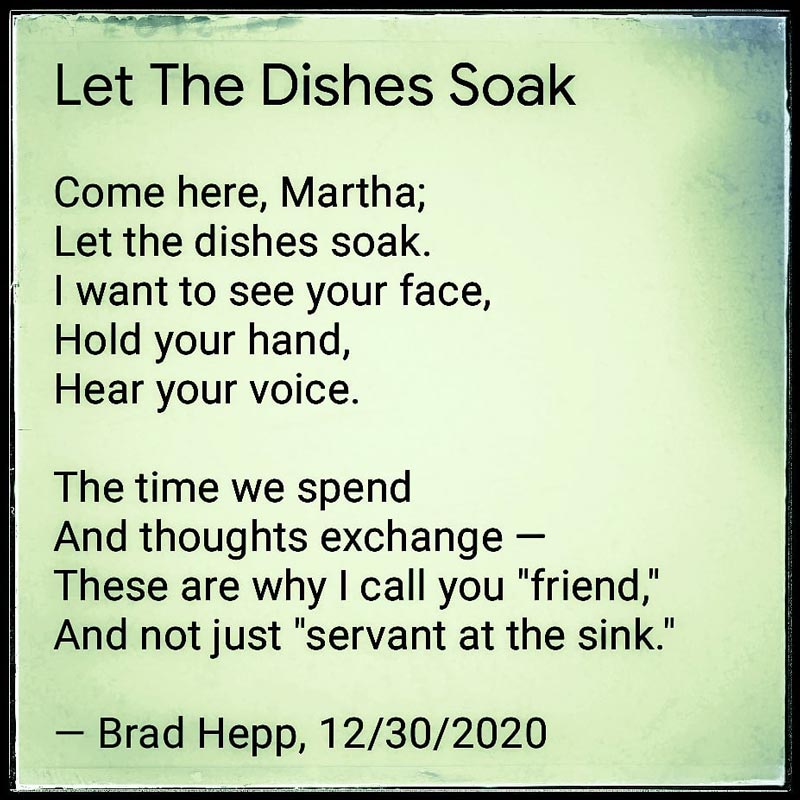
We have become occupied with many things…. Correction: BY many things.
a digital commonplace book
We have become occupied with many things…. Correction: BY many things.
I recently asked some young people, “How are we going to make 2021 better than 2020?” At first they didn’t understand me. After all, what can we do that makes a difference? But I pointed out that the worst of times externally can be the best of times internally. In the midst of chaos and conflict, we can be growing more like Jesus.
How do we grow more like Jesus? God gives us the Holy Spirit, who causes growth. But it isn’t completely passive on our part. We put ourselves in a place where the Holy Spirit is unhindered in His transforming work. That involves engaging in spiritual disciplines that are as old as the Bible, disciplines that Jesus Himself engaged in. A key phrase in this regard is in 1 Timothy 4:7
Discipline yourself for the purpose of godliness
New American Standard Bible
Or here is Eugene Peterson’s paraphrase of 1 Timothy 4:7b-8:
Exercise daily in God—no spiritual flabbiness, please! Workouts in the gymnasium are useful, but a discplined life in God is far more so, making you fit both today and forever.
The Message
As we get started in the year 2021, I want to encourage all of us to grow in spiritual disciplines. To that end, I invite you to fill in the form below, so I can know how to regularly pray for you during the months of January and February.

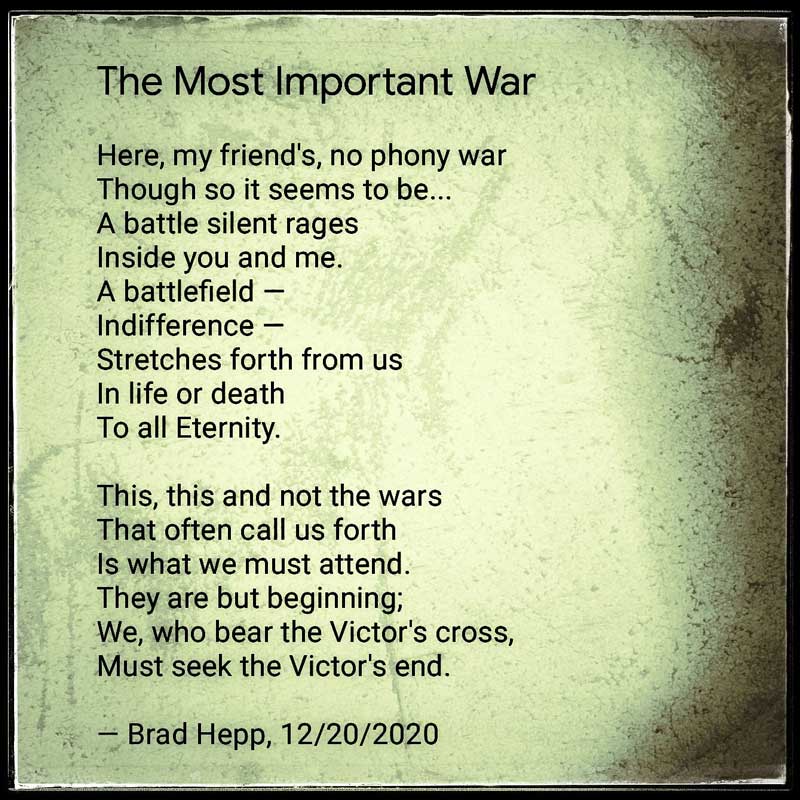
Depressed tonight, I recognize a silent battle — THE silent battle — that rages in me and friends. We occupy ourselves with any conflict at hand rather than the conflict at heart. We are intended by God’s merciful will to be fully won over in the battle to be reconciled, to be transformed into children worthy of fellowship with our Elder brother, Jesus Christ.
Jesus is the Victor. He won over sin that enslaves, weakens, and demoralizes us. He knows how we began; He also knows how we’ll end. Getting us there is His kind purpose (the Victor’s end).
So, why am I depressed? Largely because I see a problem in truly dear friends, a problem that probably afflicts me as well. They are — perhaps I am as well — occupied with silly, worthless conflicts. They are living in echo chambers that reinforce their perception that what they occupy themselves with is important. I sometimes despair of getting through to them. I don’t want to argue with them. They sometimes “like” what I write, apparently not realizing that it is completely antithetical to the trivial pursuits, the phony wars that call them forth. Some undoubtedly see me in the same sad light.
I wrote on Facebook that we need to pray for one another. God alone is able to rescue us from meaningless, hollow lives. He alone can replace depression with love, hope, and commitment.
Previous: Hatred, the Squatter
Next: Was Love Not Enough
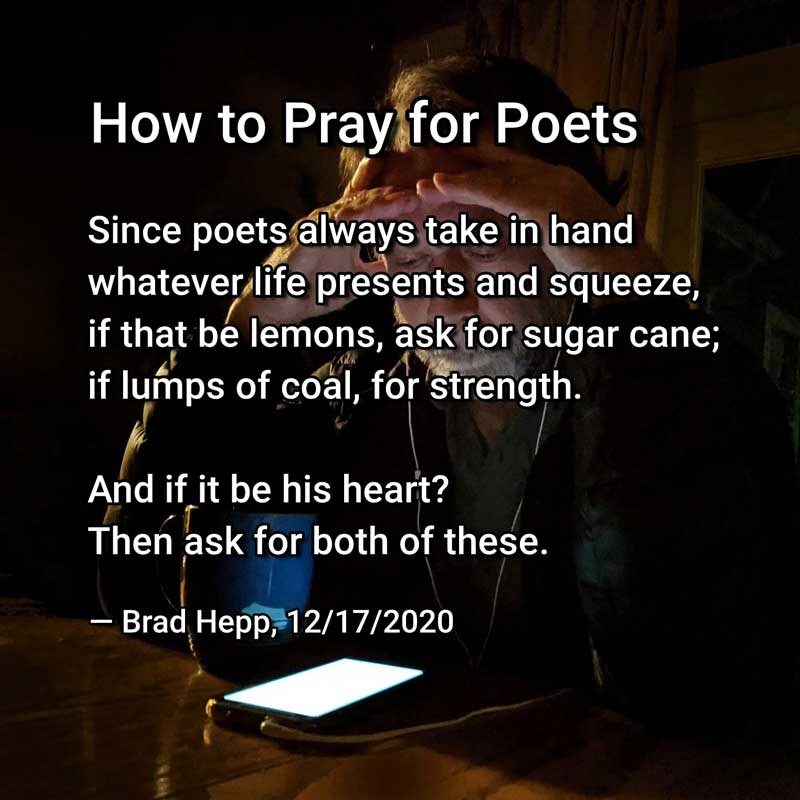
I think the essence of poetry (at least my poetry) is compression with the goal of transformation.
In all my thinking, I try to get at the nub of things, to analyze and then articulate what I find as simply, honestly, and artfully as I can.
Diamonds and Lemonade
When the thinking is introspective, my hope is that what I find will be something I am willing and able to submit to God for transformation. He’s in that process; I want to cooperate with Him… to the very end. Think of a sinful man being transformed to be like Jesus where this poem refers to the lump of coal. An old myth says that diamonds come from highly compressed coal.
Stepping back one thought…. One of the my character qualities seriously in need of transformation is kindness. Think of that where I refer to “sugar cane” in this poem. I regularly pray that God will sweeten my other attributes with kindness.
NOTE: I had Susan take this picture of me as I sat in the conservatory of the Blue Fern Inn where we were staying in Tahlequah when we were up there to bury Susan’s Mom.
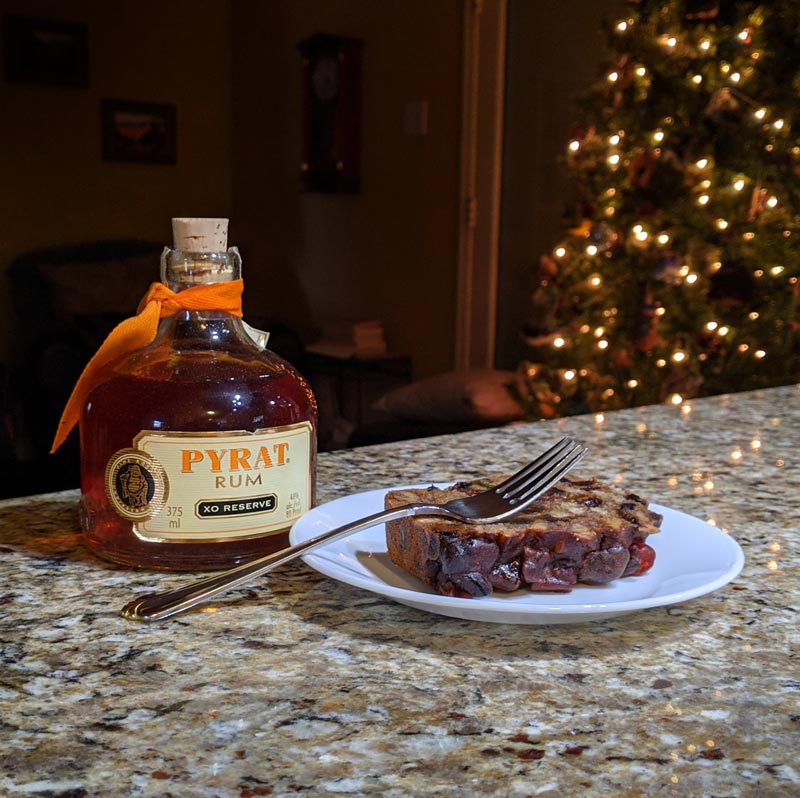
Every year, when my gift of homemade fruitcake arrives from elder brother John Stephen, I celebrate as my father did, by “Anointing the Fruitcake.” Dad passed away this day four years ago. I sure look forward to seeing him again!
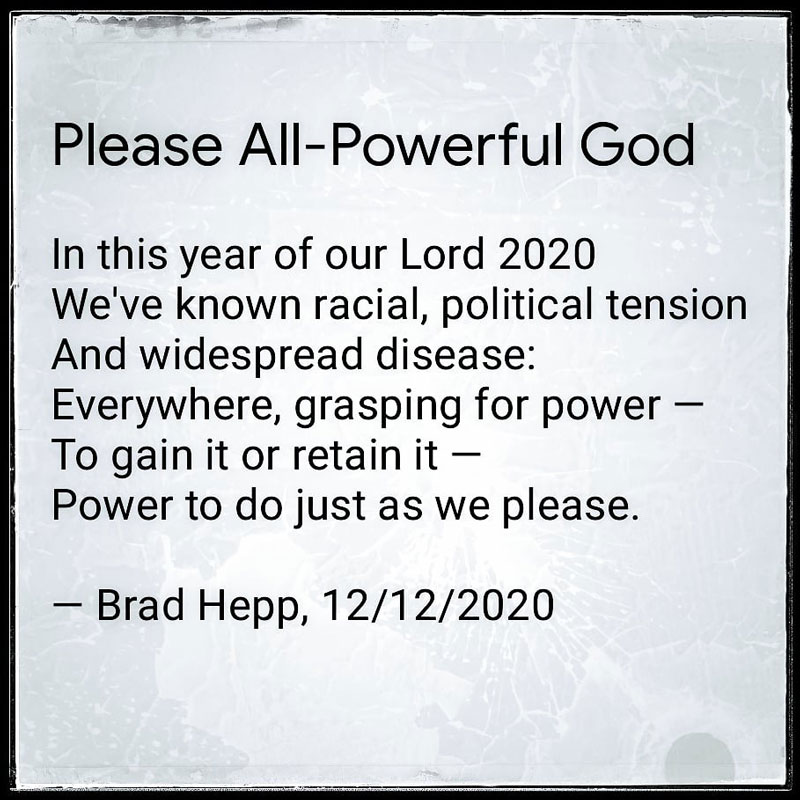
I wrote this partly in response to Mary’s wise and beautiful poem in Luke 1:46-55.
The subject of POWER has been much on my mind, in part because I have been reading Robert Greene’s entertaining but amoral “The 48 Laws of Power.”
I have been thinking about how God-fearers should relate to power. Of all God’s attributes that we can and should reflect, since He made us in His image, this seems to be one of the most dangerous.
[NOTE: I was very intentional with my punctuation, even in introducing ambiguity to the title]
Previous: My Hobby Horse
Next: Daughters of Rebellion
My friend Marco Ciavolino wrote, “Keep composing before you decompose. This is a hidden talent. I love your short song!”
I told him, “Thanks. It’s VERY hidden indeed. Long ago, five-year-old Bradley walked around the house constantly singing made-up arias in made-up Italian. They flowed effortlessly. And then the stream went underground. Seriously… I’m so glad we have Eternity!”
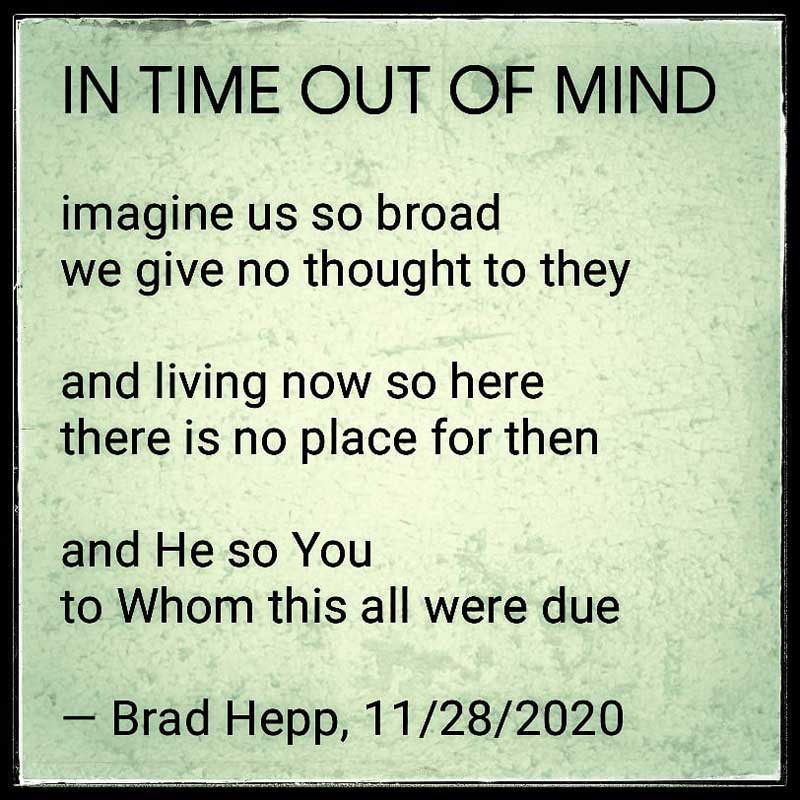
A friend asked me if there should be a comma after time. Here’s what I told him:
The absence of a comma opens this up to at least three interpretations. I know this style’s not everyone’s cup of tea. Are you familiar with ee cummings’ “my father moved through dooms of love“? That poem brings me to tears whenever I read it.
The slight effort of getting past the absence of punctuation in cummings may add to its emotional impact. Speaking of tea…. Coffee is better than tea precisely for its body, that it slides down not so easily.
So, here are some pointers to meaning:
Previous: Pleasant Sadness
Next: Matters More and Less
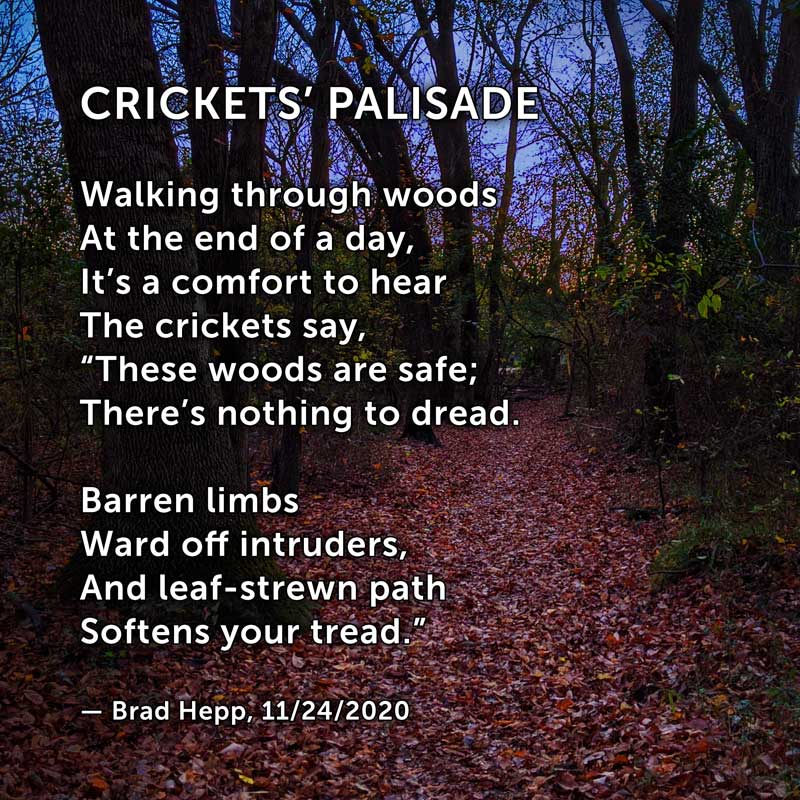
Now that the days are short, I often finish my walks at dusk. A shortcut I found through the woods can be a little creepy at that time. But the sound of forest critters is reassuring.
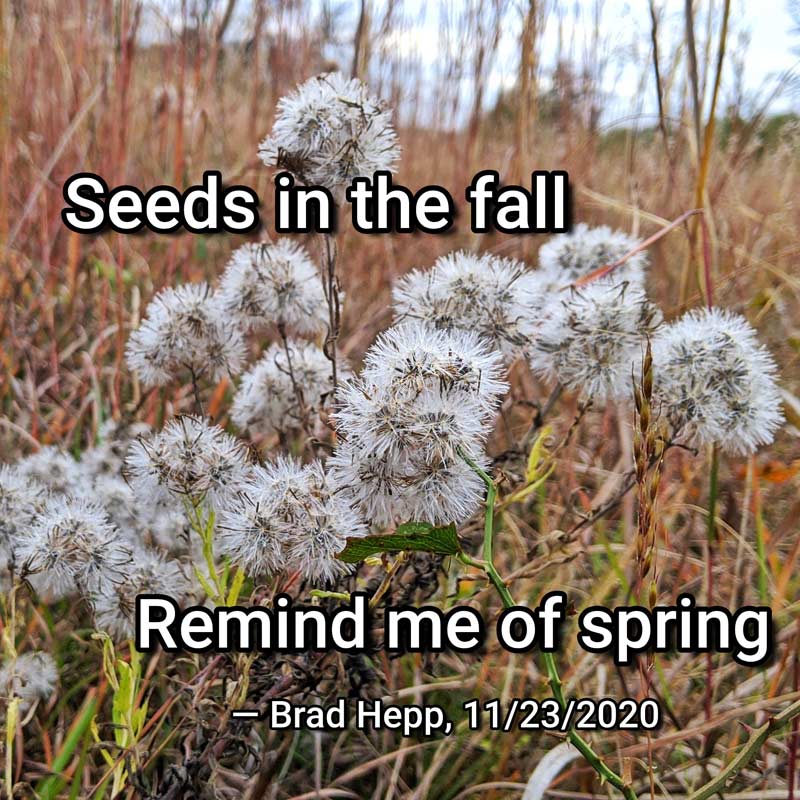
There’s a teenager with whom I compare notes. This pregnant perspective is new to to me, and foreign to him.
Lord, I would not be so petty.
Susan asked me recently if I am more concerned for the Church or for America in this year’s presidential election. I said “the Church.” Because of polarization, echo chambers, social media algorithms, and a cozy relationship between Evangelicals and President Trump, I believe there are many in the Church (especially my fellow Evangelicals) who are adopting attitudes that are out of step with Jesus Christ. They are increasingly inured to the sins characteristic of the political right.
Sins on Both Sides
I also see evidence that some non-Evangelicals in the Church align themselves more with their political preference (more often closer to the left end of the political spectrum) than with Jesus Christ. However, I am not in as good a position to discern the motivation of these Christians as I am the motivation of my fellows on the right.
I recently participated in a project for Kelly Stern’s doctoral dissertation. She hopes to earn her doctorate in Educational Ministry from Dallas Seminary in May 2021.
This was my favorite part of the project, and is particularly meaningful to me today — the day before the presidential election in the United States. The words of this short tune are just going over and over in my head.
Production note: I discovered a piece of free software called “Musescore” that enabled me to put notation to the tune I had worked out on my accordion. I’m not proud of my voice, or really all that proud of this little tune, but I thought it an appropriate act of worship and encouragement for me to also make a video of this for my friends.
The following video is one I prepared for the Midweek Devotional at Redeemer Bible Church. Here’s what I wrote on Facebook: “If you’ve never recorded a video of yourself talking or teaching, you don’t know how painful it can be. Fortunately, I can laugh even at myself. There’s one place in this video where I laughed out loud every time I hit the spot in my editing. The sentiments are heart-felt, even my chagrin. You’ll notice that I don’t nail down one crucial definition. You see, I was paying attention to the parable of the Good Samaritan: nailing down definitions is sometimes a squirrely way of avoiding duty (‘Exactly WHO is my neighbor?’)”
The last few months have involved a lot of introspection for me, much coming to terms with my selfishness.
I grew up back when screens were something that kept the bugs out, but never kept the boys in. Out there, in the little yard of the house my parents chose to buy, were plenty of my one request: a climbing tree. On our one-third acre plot, there stood no less than seven giant sycamores. One of them was my favorite, for in its welcome lower branches my older brother built an elevated platform… just for me.
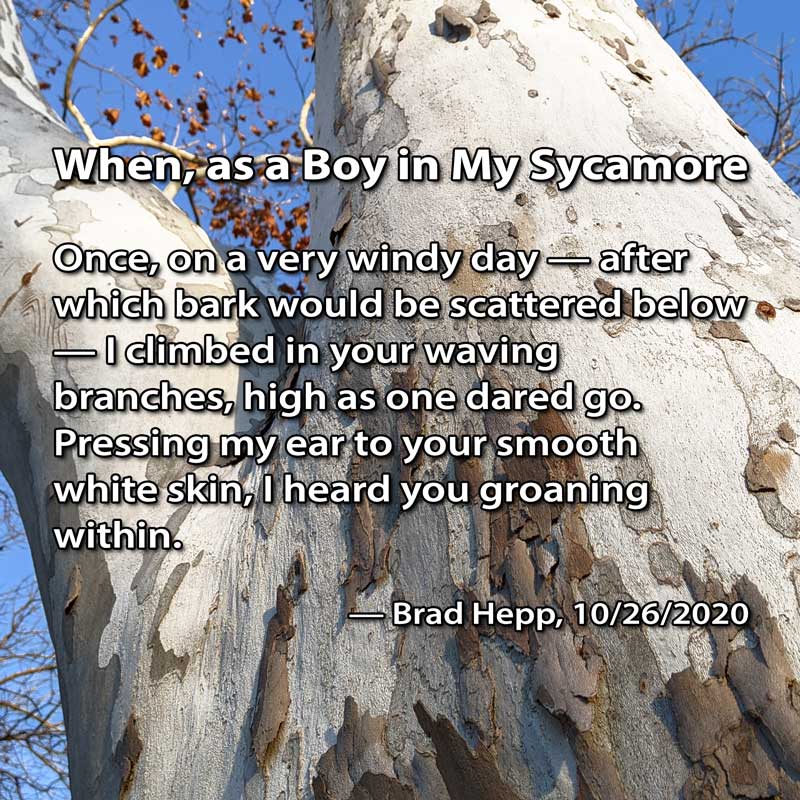
To help find this poem: When as a Boy In My Sycamore
As I think about Luke, wealth, the fruitful tree, I become less a Pharisee, and daily more a grateful conduit: imago dei as I was meant to be.
My work is done for the day. His work may now proceed.
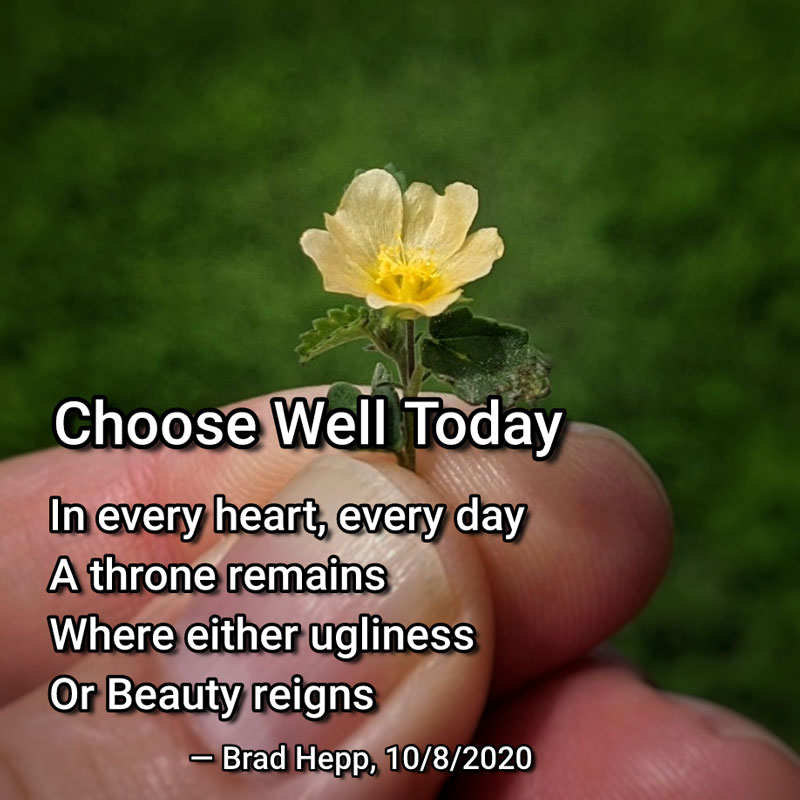
Last night, instead of sleeping, my mind was aswirl with thoughts of trees, vines, fruitfulness, and the relationship of these to imago dei. Too often, I have stopped at noting the object (e.g., the persistent tree) without noting its purpose: fruitfulness, provision, generosity like that of the Creator.
“Be fruitful.” “He is like a tree… that yields its fruit.” “Also, on either side of the river, the tree of life with its twelve kinds of fruit, yielding its fruit each month. The leaves of the tree were for the healing of the nations.”
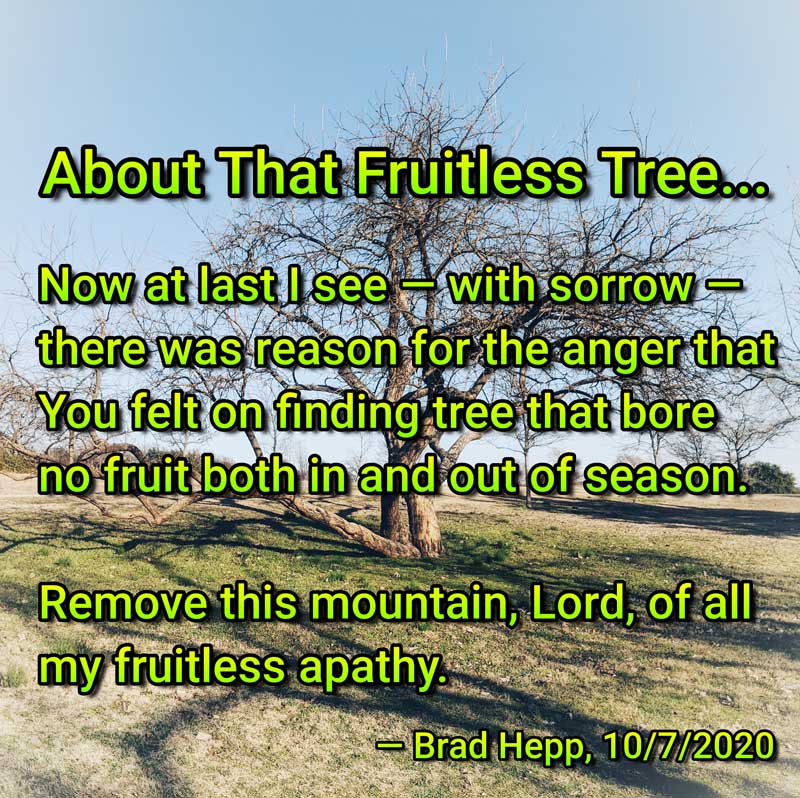
I just listened through Luke, considering GENEROSITY as a sub theme. It’s pretty moving to think that God wants us to reflect Him in our generosity! Once again, I thought as well of my Dad’s favorite poem. Browning nailed it so often!
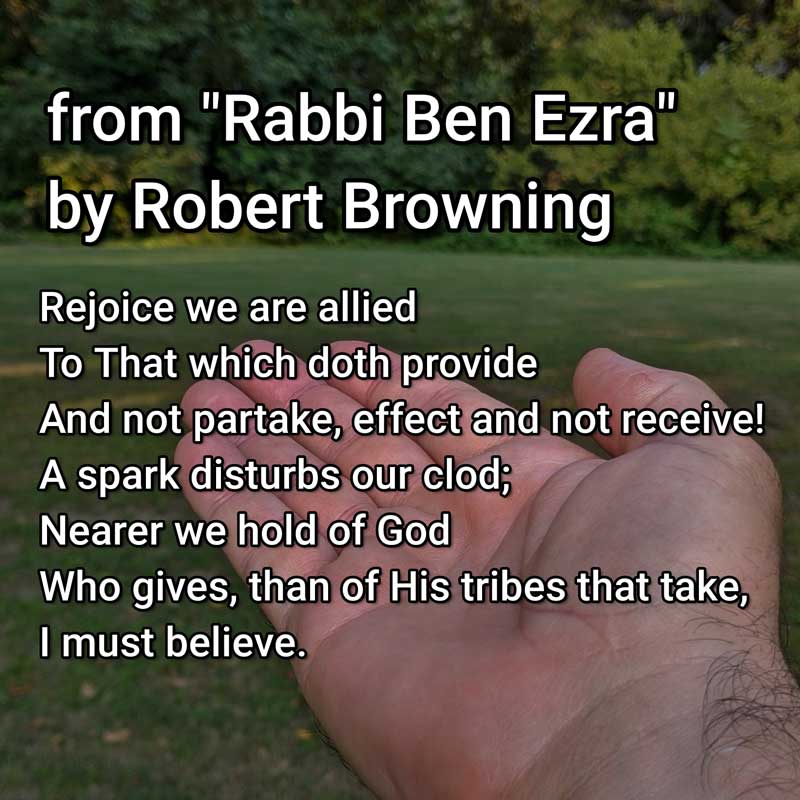
By the way, I don’t know Browning well enough to be SURE what “tribes” he refers to in this stanza. Hopefully, he was using it to refer to the creatures which he contrasted with man in the preceding stanza:
My thinking on this subject worked its way into a devotional I did later this month: “Generosity, A Fruit of Godliness.”
Forgive me. I usually try to write poems that I myself understand. This one captures an actual vivid dream that I’m still trying to figure out.
GENEROSITY: That’s what’s on my squirming Scottish mind. As I observe how Luke deals with wealth in his Gospel and the first few chapters of Acts, I want to say that generosity is one of the chief fruits by which we should be known. Love may be warm and fuzzy; in action it is often green, cold and hard (like cash).

(image built from two images on Pixabay, one by Bru-nO and the other by Gerd Altmann).
My thinking on this subject worked its way into a devotional I did later this month: “Generosity, A Fruit of Godliness.”
This is increasingly true, but increasingly threatened, always in question.
Thinking of Abraham, Moses, and others* who thankfully illumine even now.
(background image from Pixabay)
*Poem was my immediate response to a Facebook post by Sten-Erik Armitage, where he wrote
In my pride, I don’t need God. I know better, and I can do it on my own. In my despair, I don’t want God. He doesn’t care, and he couldn’t help me anyway. In cultivating thanksgiving, I recognize my total dependence upon him and grow in humility and peace.
Sten-Erik Armitage
Don’t misjudge “mindless” in this poem as I often misjudge it in life. Thinking matters; DOING God’s will surely matters more.
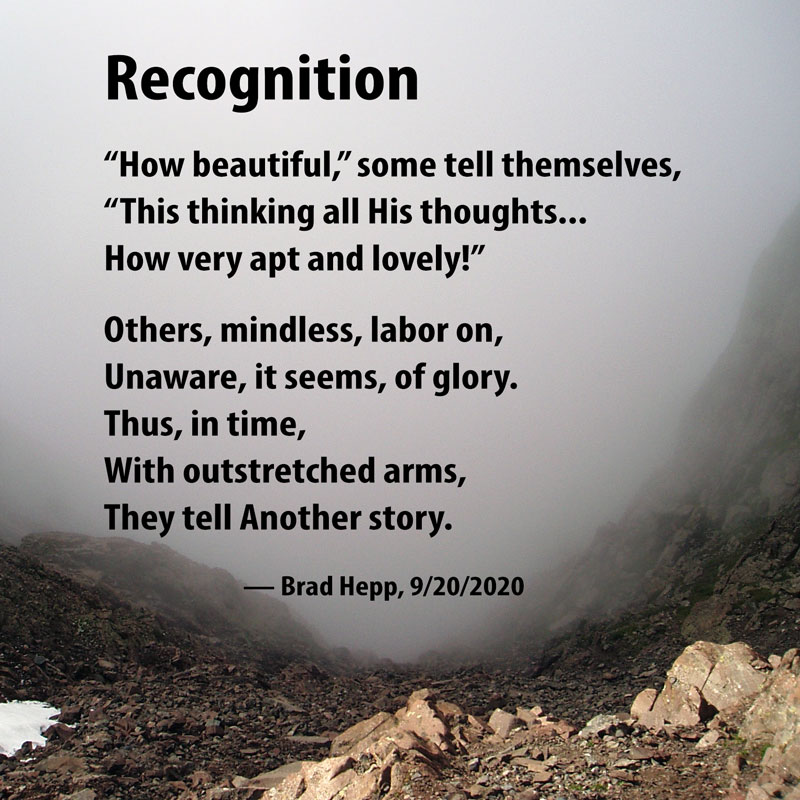
Background photo was taken while climbing the Red Couloir to Crestone Peak (2005).
Does the bright light in the bottom right bother you? Me too.
Your word is a lamp to my feet and a light to my path.— Psalm 119:105
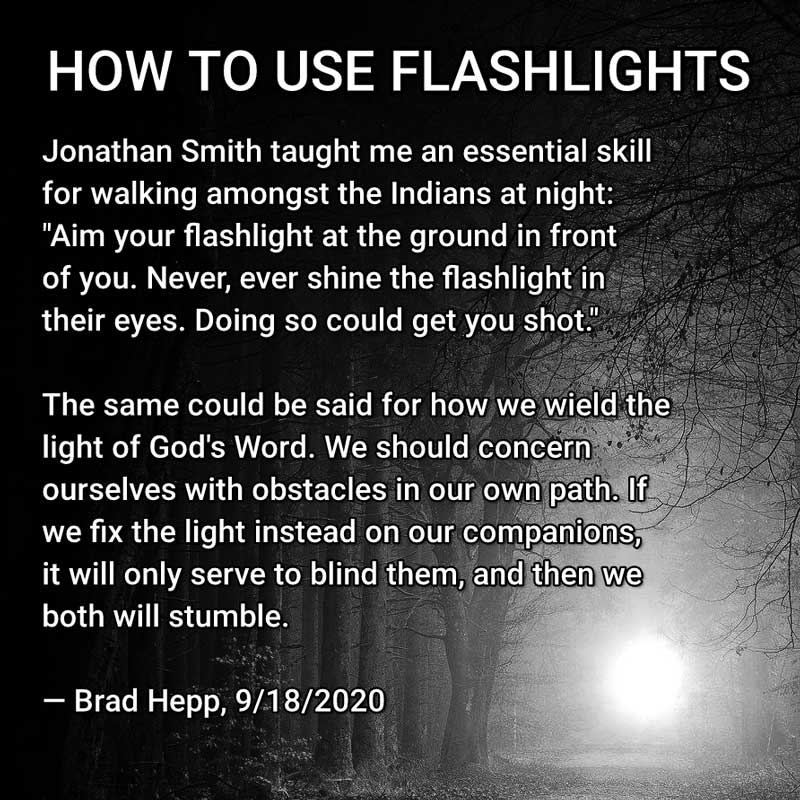
I hope it doesn’t ruin anything to say this…. What I wrote above was the most positive way I had of expressing a mounting disgust I have when Christians stab at each other with broken shards of Scripture, snippets that SEEM to make a case against the target without really doing so. It’s haughty, lazy, and vile. People who grieve their own brokenness are not obsessed with pointing out the brokenness of others (a sermon to myself, if there ever was one!).
Background image was from Pixabay.
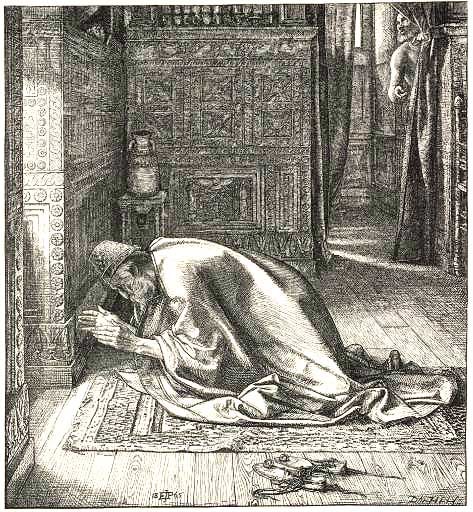
Something is now coming into sharp focus for me: we believers are responsible to deal not only with our own sin, but — very carefully! — with the sin of our brothers and sisters in Christ. It is not enough to merely take notice and be disappointed or disgusted. We must at least pray for one another, and sometimes plead. I can’t help but think of righteous Daniel: “O Lord… WE have sinned.”
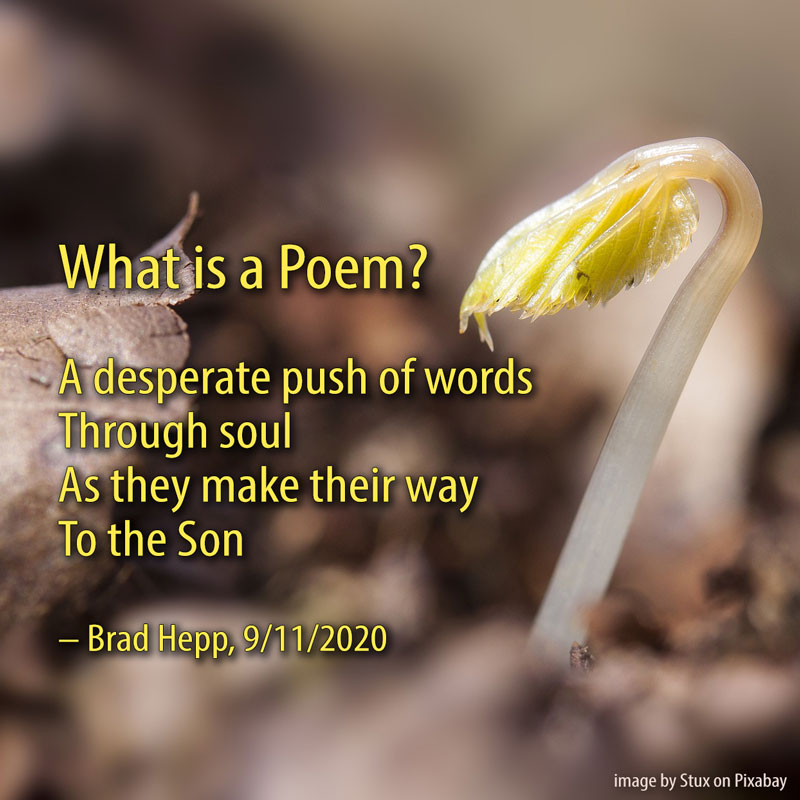
Here’s one for my fourth-grade teacher, “Aunt” Eleanor Timmerman, who likes the word play of sun/Son.
TIP: think of how a boy from East Texas pronounces “soil.”
The last several months, I have done a lot of deep thinking about how shallow I am… in knowledge, motivation, and obedience. God IS merciful.
Most days I take time to reflect on beauty. No king anywhere has more of this than you or I.
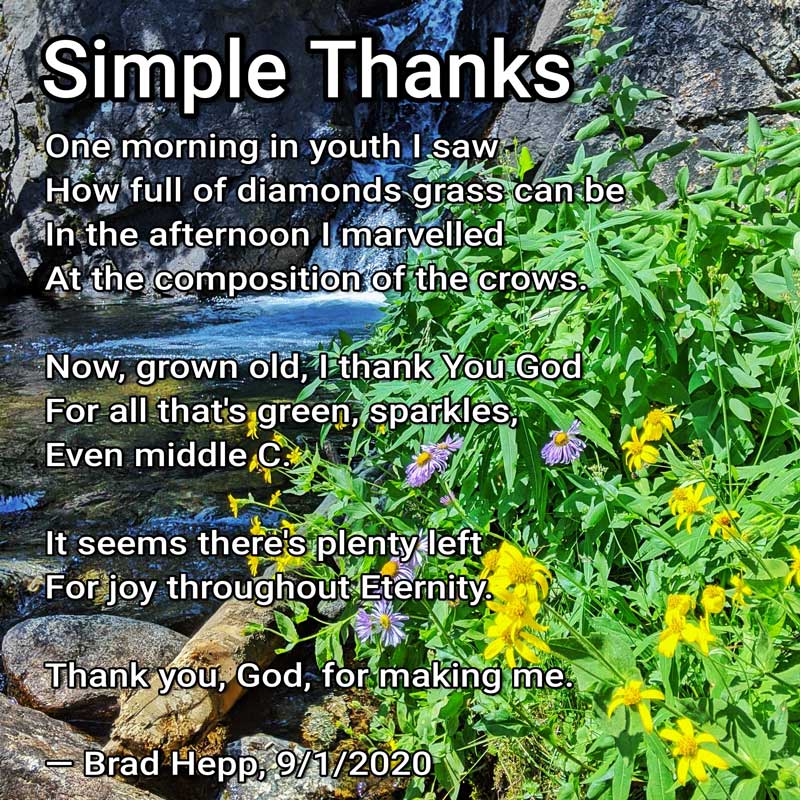
Background image: Willow Creek Falls near Silverthorne, Colorado
I was contemplating the metamorphosis of people willing to die to faux prosperity.
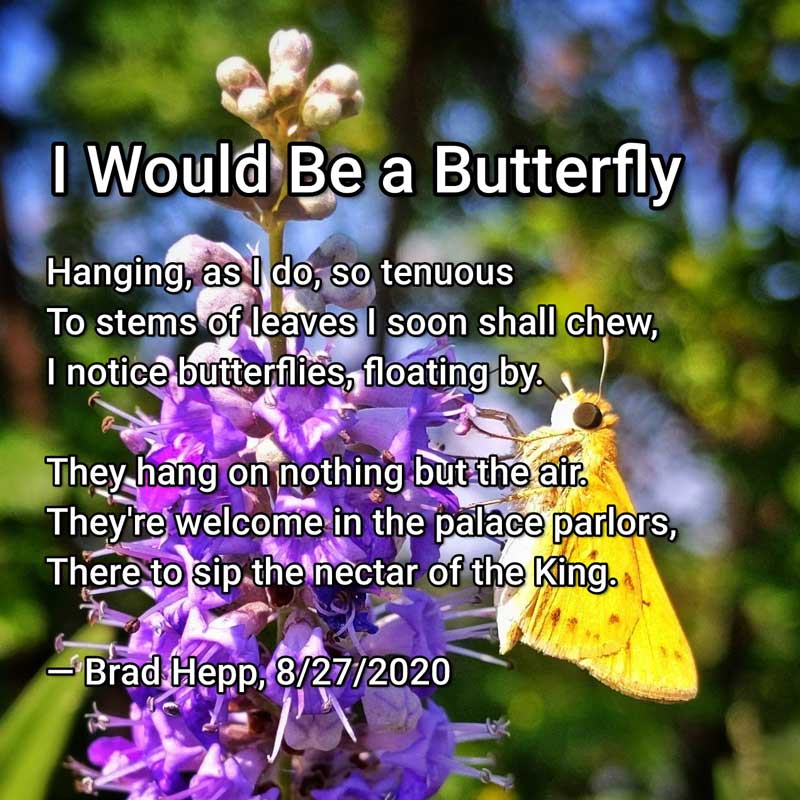
I grew up in the mountains, and I still grow up there, little by little.
I took the background photo from the Air BnB that our family was staying at on vacation in Silverthorne, Colorado.
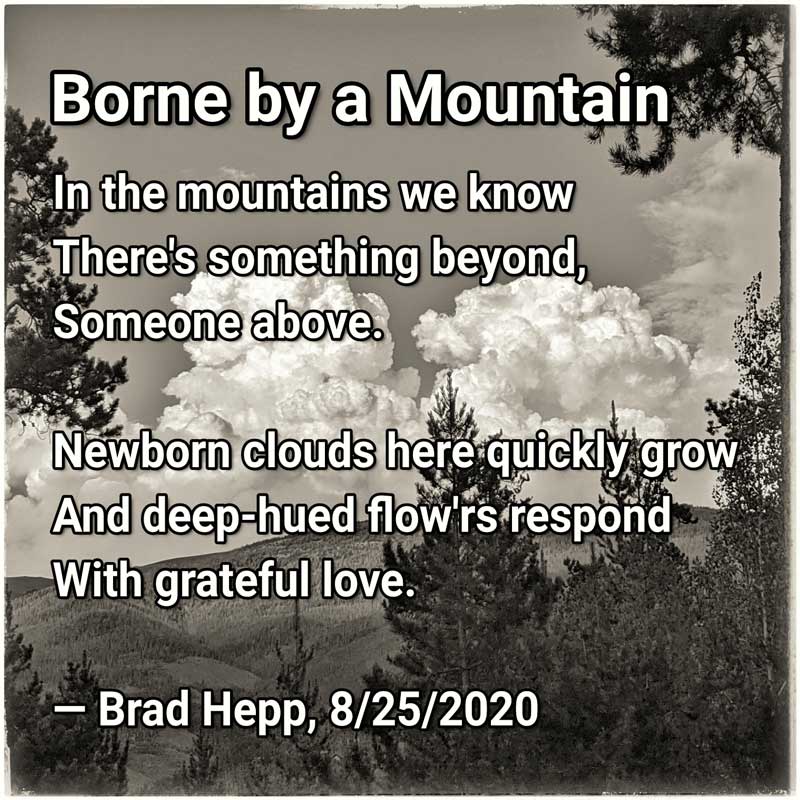
I have no idea why this little song came to mind. I was on vacation, looking around at the mountain flowers. Below the song as I formatted it then, I have posted something I’m playing with, the score and rendering by Musescore. The voicing is ridiculous, I know…. I’m just learning that program.
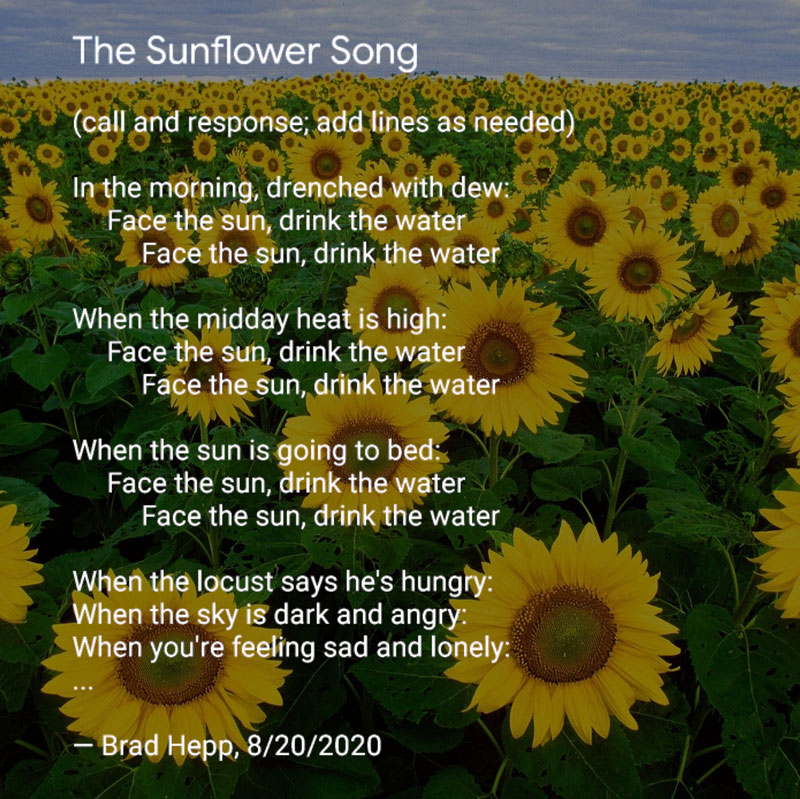
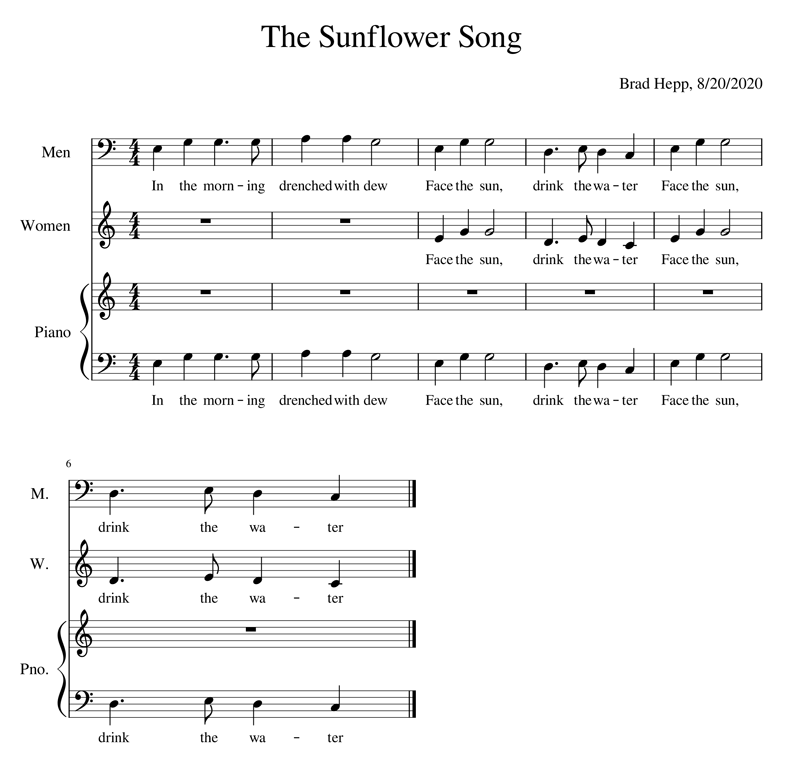
I was sitting outside our Air BnB while on vacation in Silverthorne, Colorado. It was a crisp mountain morning. The birds were singing, occasionally geese flew over in formation, and this beautiful mountain filled my view (Red Peak?). But next door, there was a workman happily whistling as he worked outside. He distracted from “nature.” But I knew my being annoyed was wrong. I had to write this rebuke to myself.
This is a video I recorded for the August 19, 2020 Midweek Devotional of Redeemer Bible Church. What I say reflects a fair amount of the progress I have made over the last few months. Some of it is a veiled protest to the power- and security-seeking motive that is wrecking the witness of Evangelicals in America. My pastor had to point out that “Pursuit of Suffering” is going too far, that the concept has been abused in Church history. He and I did agree that the proper response to suffering looks a whole lot more like “pursuit” than the terrified and often proud evasion that is rampant right now.
Production Note: I recorded this with my Pixel 3a, and only noticed later on that the white balance is constantly changing: white-yellow-white. The camera on that phone is terrific, but there doesn’t appear to be white balance lock!
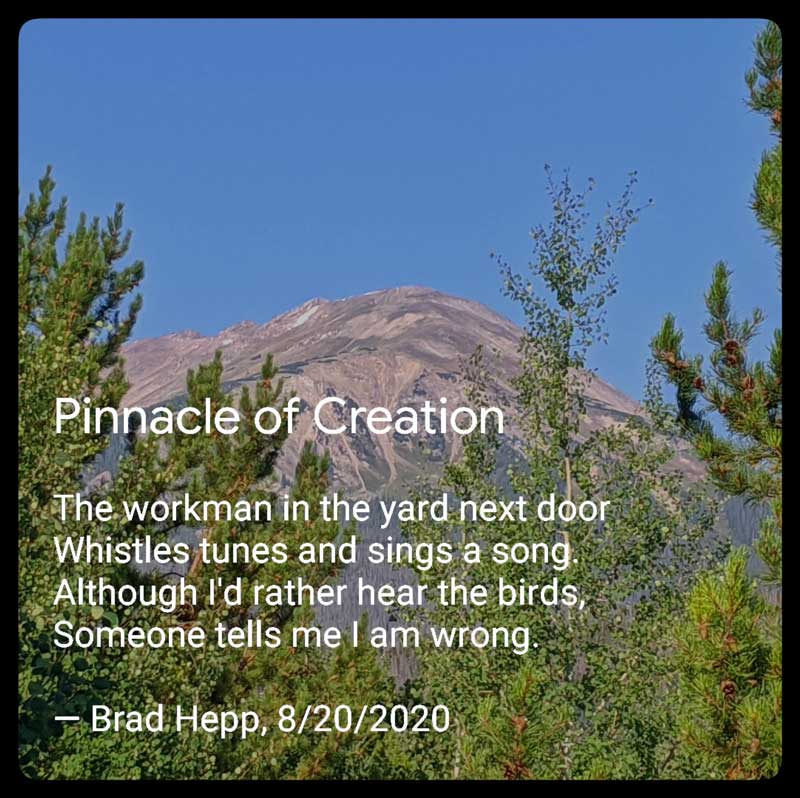
This strange poem is the nightmare I had last night. I *think* it wove two strands: contemplating Acts vis-a-vis evangelical triumphalism (really!), and reflecting on the vulnerability young people have to passions (I’m a father, who once was young).

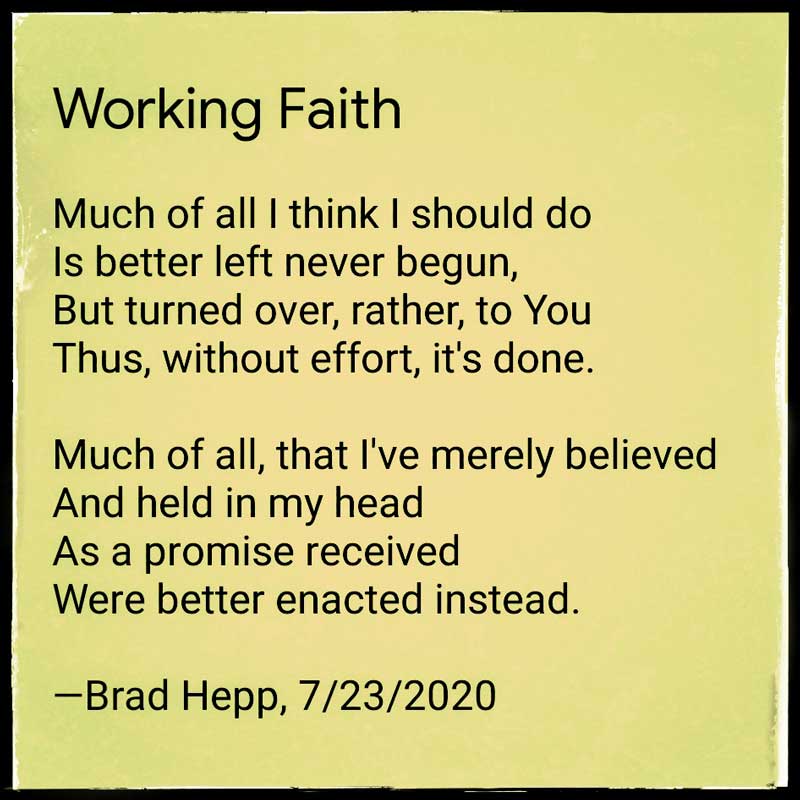
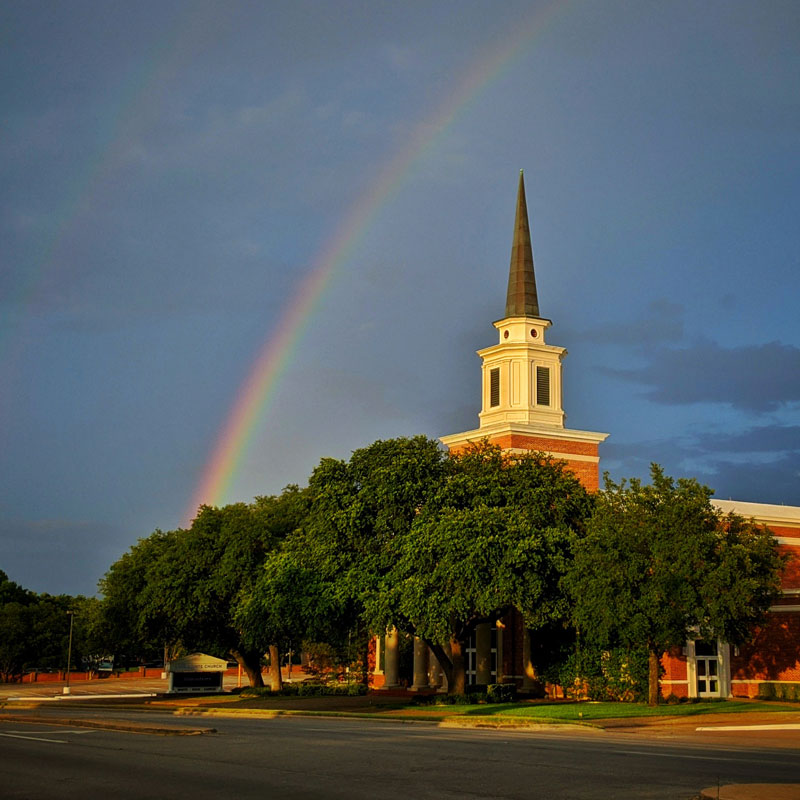
I was nearing the end of a long walk when I saw this full rainbow. I ran up Garland Road to the place where I could snap this shot.
I read that a writer comes alive by telling dead men’s tales. Here’s one such tale, though it’s not the *men* who died. This little poem was a lament. A dear friend had tried to persuade someone that his even-handedness in politics is NOT a retreat from righteousness. But the opponent was trapped in his or her allegiance to one end of the political spectrum.
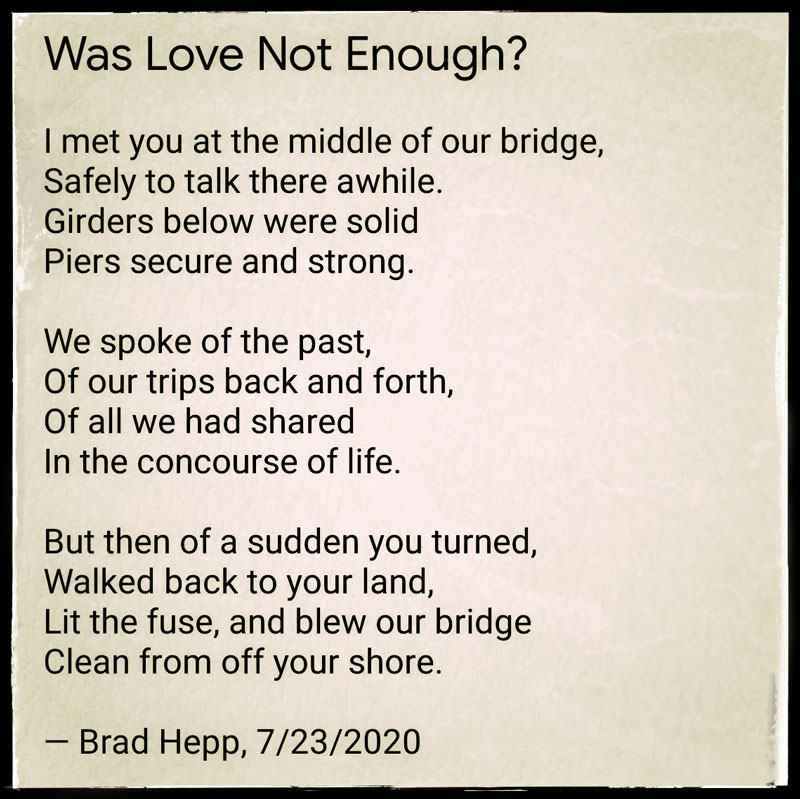
December 20, 2021 Update: This problem has only grown worse over the last 17 months. I’m now reluctant to talk openly with people I once considered eminently reasonable. I fear being disappointed, and I fear opening the door to enmity where no enmity existed before. Now, more than ever, I live with this refrain: “Anything I say can and will be used against me.” I have a Christ-like friend who had to get off social media because there is someone out there — supposedly a Christian — literally building a case against him, misinterpreting anything he says, casting it in the worst possible light, and cataloging the supposed sins. Call that someone The Accuser.
Previous: The Most Important War