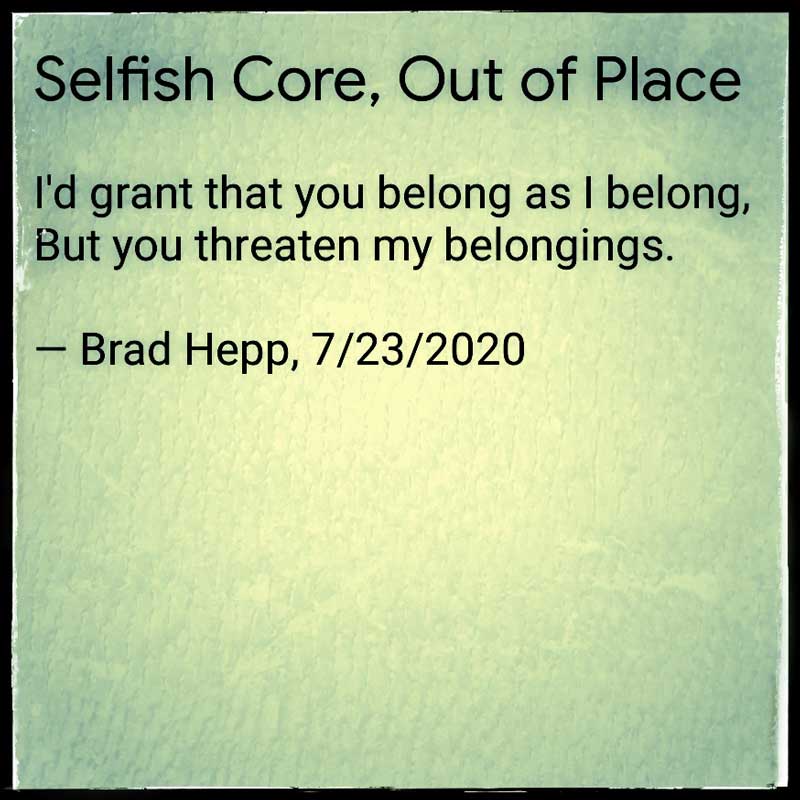
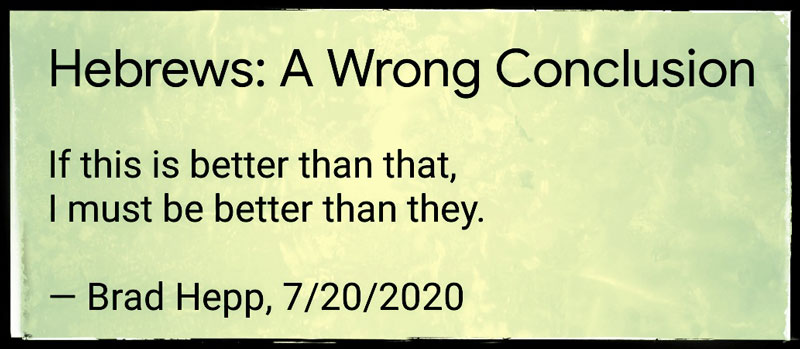
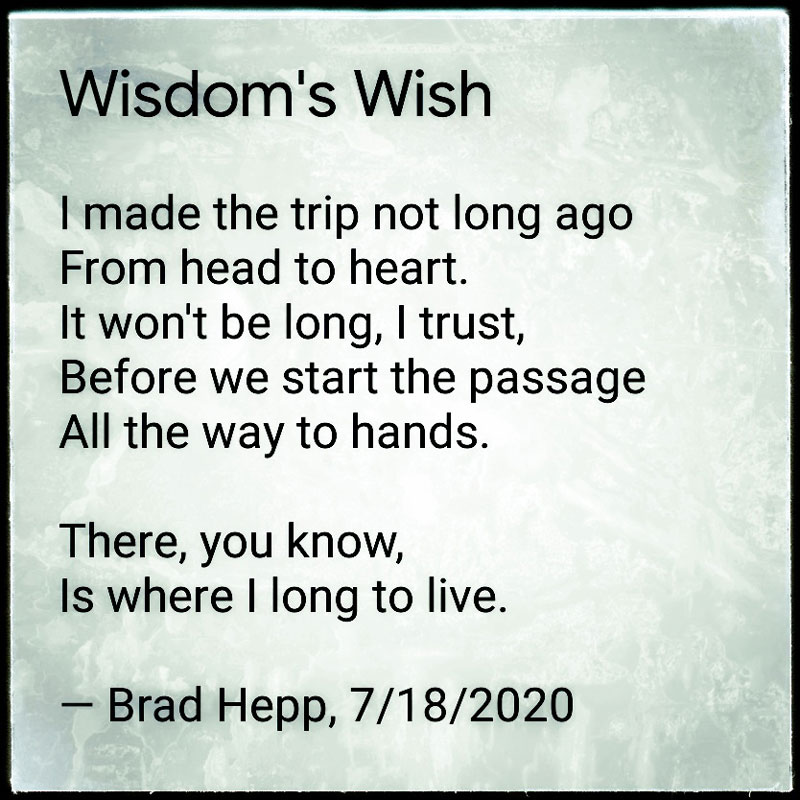
I’m slowly writing a prose piece I call “Belonging and Belongings.” The poet in me would rather be done with it.
When I posted this on Facebook, an elderly friend commented with what he admitted was a “tirade” against the political left. Here was my response to him:
[Name], I’m aware that the left is full of godlessness and evil intent. I’m also painfully aware that Brad Hepp is a self-centered, and selfish sinner, saved ONLY by grace. I want to follow Jesus Christ on paths where neither the left nor the right can serve as guides. The day may come when I regain an interest in politics, but right now, I find that politics has commanded the heights of my heart far too often. I’m an exile, trying to reserve all my allegiance for another Kingdom.
THE SETTING: When I was attending seminary, I worked at a ministry, and one of the ladies there drove me crazy. She’d go around saying “Praise the Lord” whenever there was a problem. It got annoying, so one time, after she had repeated those words for the umpteenth time, I smarted off, “You first.” With a confused look, she asked, “What do you mean?” I said, “You just said ‘praise the Lord’ and I am encouraging you to do that.” She was still confused, so I explained, “Saying ‘praise the Lord’ has no CONTENT; I think you should specify HOW the Lord is praiseworthy.”
THE REBUKE: She looked at me and said, “I’ll tell you something my husband always says about you Dallas Seminary students…. Your theology is as straight as a double barrel shotgun, and just as deadly. “Well, uh, uh, uh…. She didn’t know me well enough to be saying that. OR DID SHE?
The Internet browser fills my head with worrisome headlines. They did this! They are doing that! They, they, they. Soon, I forget to look for what He is doing.
Surely I’m not alone in catching a whiff of arrogance in the way I sometimes think of those who went before. This came to mind just now as I read Hebrews. God is merciful, not least in revealing the many reasons our elder Brother had to suffer in our place.
When I read biographies or the writings of men and women who inspire us long after their own time, one thing I look for is how they fell deeply in love with their subject. Simply put, I want what they had.
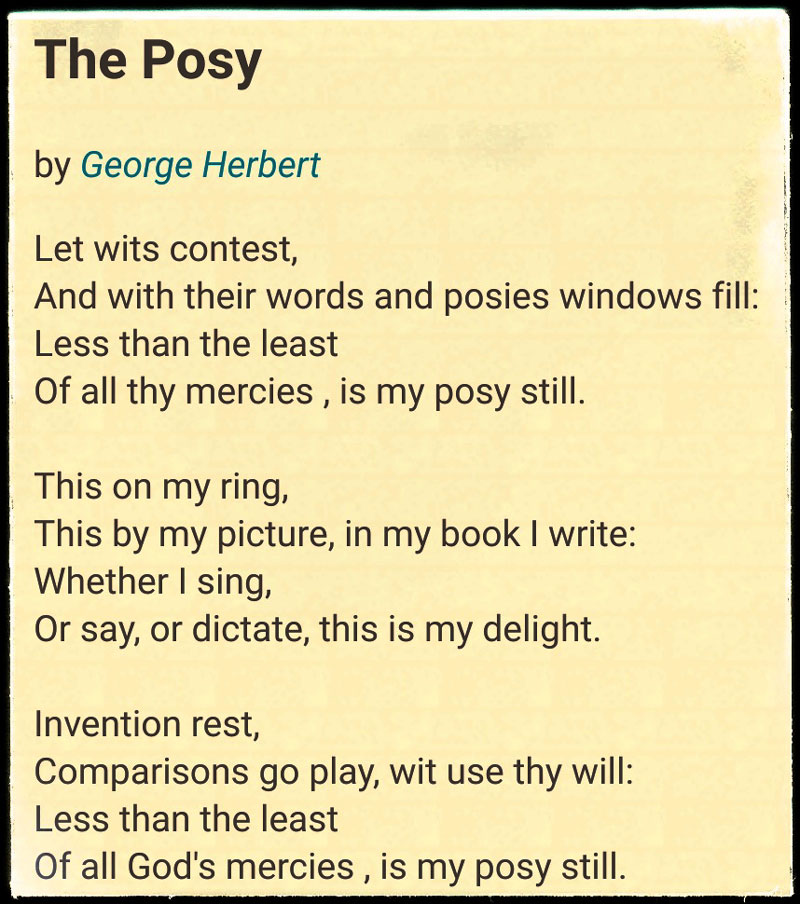
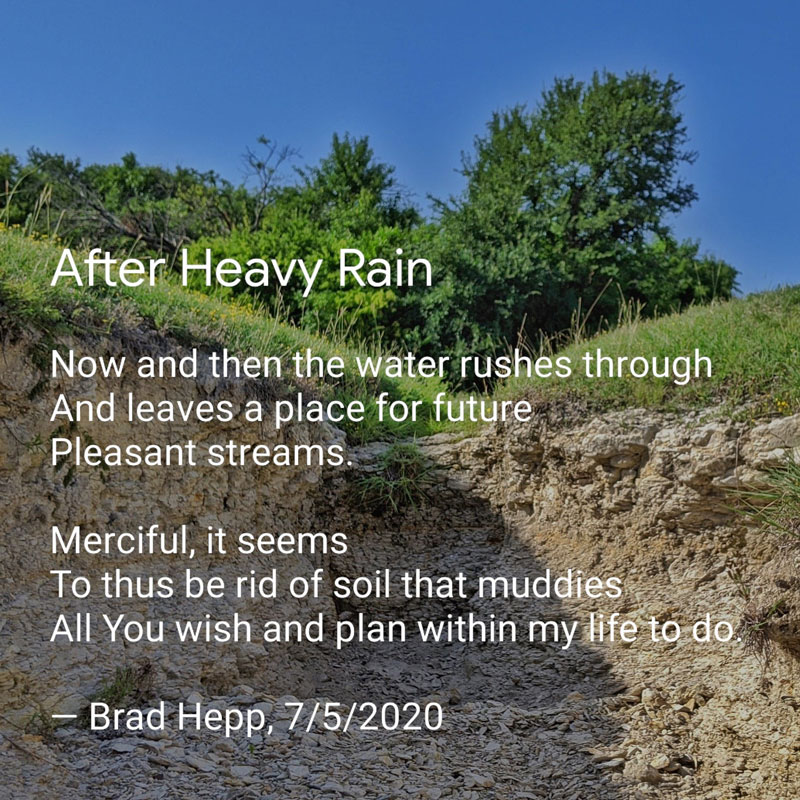
For instance, in reading the poetry of George Herbert, I see that he liked to go through his day repeating simple truths, ruminating I suppose. In the poem quoted below, he refers to a simple phrase that he contemplated: “Less than the least of all thy mercies.”
George MacDonald wrote entire novels exploring one or another beautiful quality in the lives of his characters. That’s a long contemplation of one quality!
At Christmas, we often hear a child recite the first 20 verses of Luke, chapter 2. That’s beautiful. But it’s the section immediately following that affects me most deeply. When the child Jesus is presented at the temple, Simeon and Anna recognize that they are witnessing something that will change the course of history. They have both waited a lifetime for the “consolation of Israel,” the “redemption of Jerusalem.” And here He is!
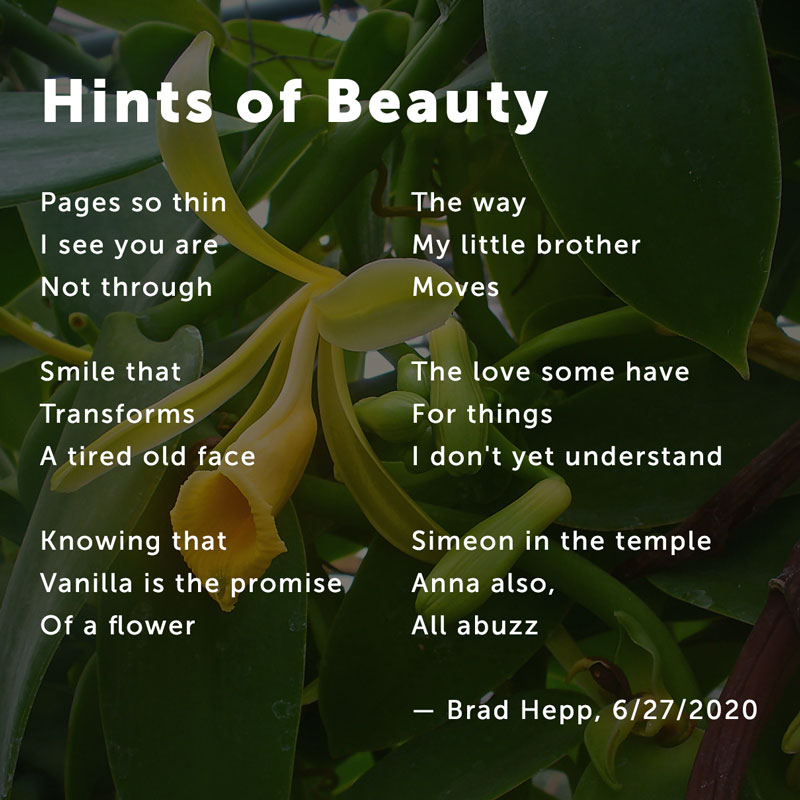
Pages so thin
This is the least emotionally honest of the stanzas. On those rare occasions when I pick up a printed copy of the Bible to read (my go-to is digital text), I can see through the thin pages to printing on the other side. I am not actually moved by BEAUTY when I see that. Rather, what that points to in this stanza is thematic. What all the other stanzas have in common is the anticipation of beauty replacing ugliness. MacDonald said it well: “The end of the Maker’s dream is not this.” I think that anticipation of beauty is what affects me.
Smile that transforms
One day, my son and I were waiting at Sonic for the waitress to bring our order out to the car. As we waited, Jonathan commented, “She doesn’t seem very happy.” I responded, “When she comes out, give her a big smile, and watch what happens.”
She came out, holding our tray of burgers and fries. Jonathan flashed a big smile at her, and her tired old face twisted into a responding smile. After we rolled up the window, I asked Jonathan if he had seen the transformation. He had!
I am looking forward to the smile of God, in the restoration of all things (see “Violets”).
Knowing that vanilla
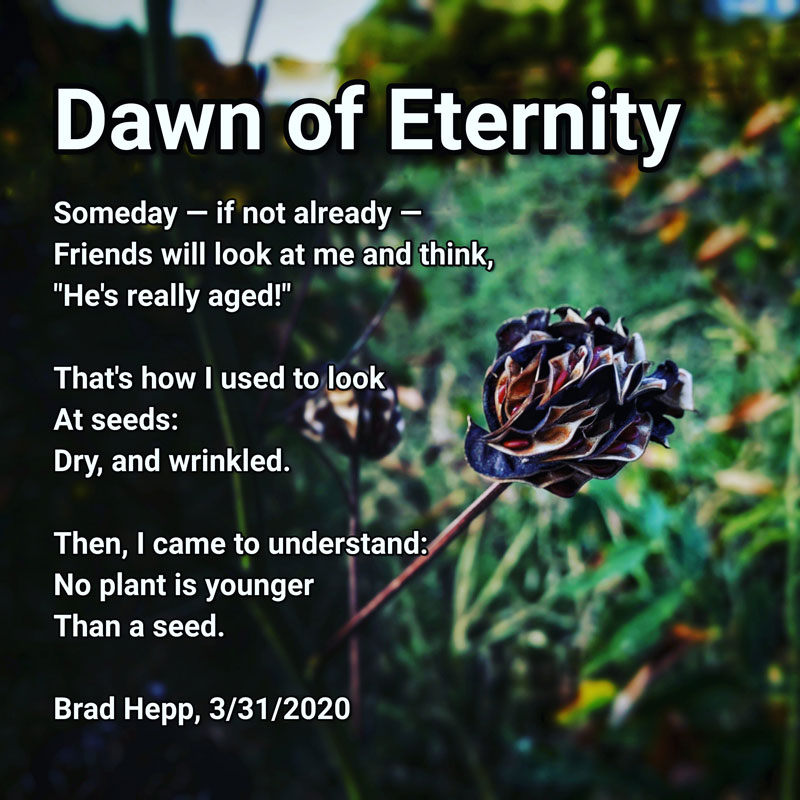
Last year, I had spent months photographing flowers on my walks. In Autumn, the flowers were spent, and I wondered what was left to photograph. Then I started looking closely at what had become of the flowers. Seeds, of course. And some of the seeds were also beautiful and fascinating. But what really grabbed me was the realization that seeds are not the end of beauty, but its beginning (see “Dawn of Eternity”).
The way my little brother moves
I love to watch young children moving to music. There is one video in particular that comes to mind. I believe it may be a young Malawi boy moving subtly to music. His smile and movement are enchanting. So why “my little brother”? I’m the youngest of my family. I don’t literally have a little brother. Rather, I look forward to a day when barriers are removed and we can fully enjoy the brotherhood of man — with all its cultural diversity and beauty.
The love some have
I have had several exchanges about language with my Ethiopian friend Yohannes. When he points to beautiful speech and ideas expressed in Amharic — a language I do not know — I tell him I’m jealous. His response: “That’s beautiful my friend. It speaks of a lot of good things. The wonderful thing is that one day we shall all understand!”
Simeon in the temple
I wrote above that the accounts of Simeon and Anna in Luke 2 affect me deeply. Here’s how deeply…. Once, I was walking around the lake listening to an audio version of the Bible. When I got to the account of Simeon and Anna, tears started streaming down my face. It was a good thing nobody else was out walking that day. Why was I so moved?
Simeon and Anna were both very old. They would soon die. But this child filled them with hope. Perhaps it was “merely” hope for their people. But you and I know the rest of the story. Thirty-something years hence, Jesus would die a death that will forever put an end to death and ugliness. His Resurrection from the grave demonstrated God’s power and pleasure in restoration. Like all who believe, Simeon and Anna will once again embrace their beautiful Creator.
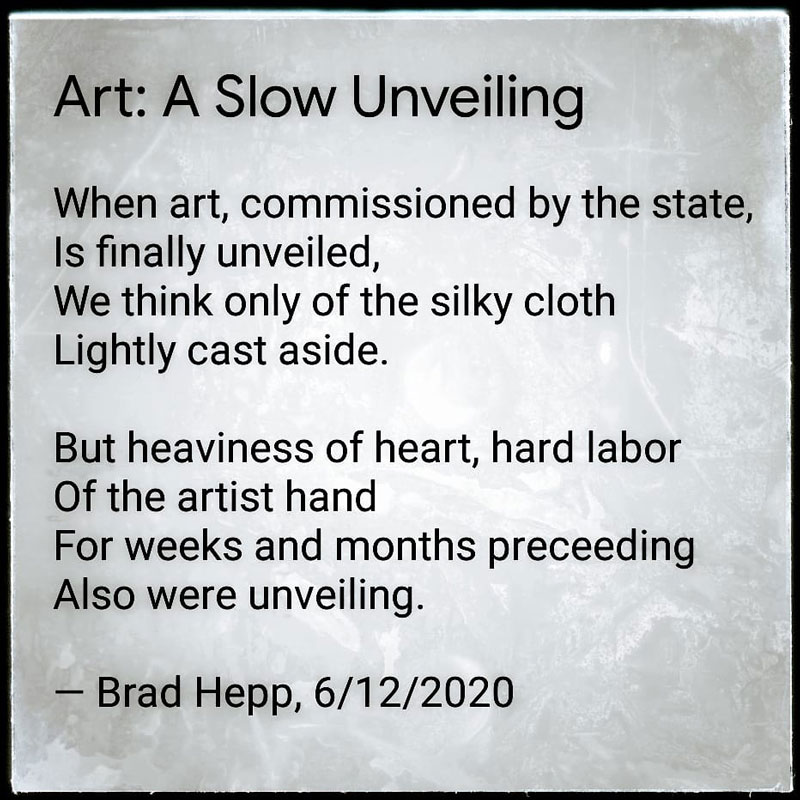
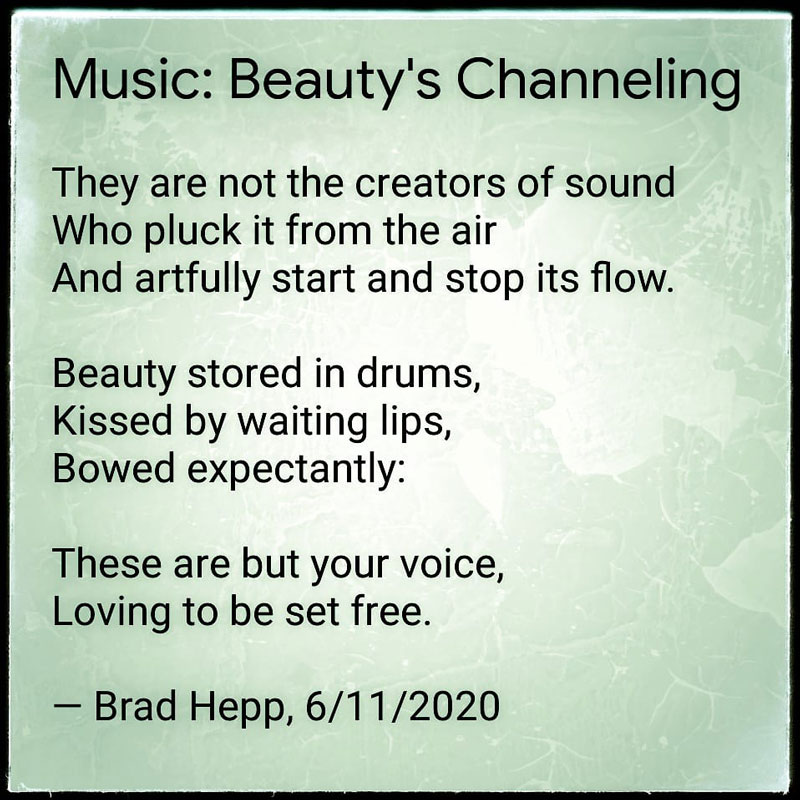
This is a second attempt to understand beauty as preceeding its so-called production. Although it may seem that I am empasizing the heavy task of the artist, the real point is that the artist is unveiling beauty from the time he or she begins the project. As one who believes that creation is full of beauty put there by God, I am trying to appreciate his role… without diminishing the role of the artist.
Michelangelo said something similar long ago:
The sculpture is already complete within the marble block, before I start my work. It is already there, I just have to chisel away the superfluous material.
Every day, when I lie down for a nap, I listen to beautiful music and try always to think of where beauty was born. This may sound silly to some, but I’m trying to put myself in a place where I can better appreciate beauty. So — brace yourself — I picture myself sitting on the edge of a cliff, looking out over a beautiful creation. The creator himself is sitting next to me. I am listening with him. That’s how I fall asleep.
After several weeks of doing what I just described, I was sitting one evening listening to beautiful music. Suddenly, I had a different perspective: the music struck me as a capturing of the beauties of sound, not their mere production. So I thought of an orchestra:
The strings “pluck it from the air.”
Percussion releases it from drums in all its vigorous exclamations.
Brass and woodwinds kiss it with their lips.
Strings express the tension of pent up beauty with their bows.
And then, the point: God can’t help but express (voice) beauty, and loves to share it with us, his creatures.
Beauty, that’s what’s on my mind. Arguments are being made left and right by people who want to put an end to ugliness. And I’m on board with that, especially as it relates to the ugliness in my own heart. I see deep-seated ugliness in myself many times throughout the day, as I make quick judgments about people, based merely on appearance or their confusion about reality.
That I should have a lower opinion of man than God does is probably the epitome of my poor judgment, the basement of my stupidity. But there it is: I think poorly of what God loves. This is ugliness in my heart, and I project it on the world around me.
But Beauty
This attracts me. I’m never repulsed by beauty, are you? Want to convince me of something? Show me not just the ugliness of what you would have me set aside, but the beauty of what you would have me reach for.
We are sometimes blinded to ugliness. We are also blinded to beauty. Arguments should open eyes to beauty, to what could be, and in the end will be: a world fully aware and appreciative of beauty, perfectly reflecting God.
I’m reminded of a poem by Gerard Manly Hopkins. I can’t say that I understand every line of this yet, but let me attempt a reading, nonetheless:
God’s Grandeur The world is charged with the grandeur of God. It will flame out, like shining from shook foil; It gathers to a greatness, like the ooze of oil Crushed. Why do men then now not reck his rod? Generations have trod, have trod, have trod; And all is seared with trade; bleared, smeared with toil; And wears man’s smudge and shares man’s smell: the soil Is bare now, nor can foot feel, being shod. And for all this, nature is never spent; There lives the dearest freshness deep down things; And though the last lights off the black West went Oh, morning, at the brown brink eastward, springs— Because the Holy Ghost over the bent World broods with warm breast and with ah! bright wings. — Gerard Manley Hopkins, 1877
I dedicated this little poem to my friends of color, by whose grace, wisdom, and other beauties I hope to better appreciate our Heavenly Father. It’s a slow process. Foolishness is bound up in this heart of mine.
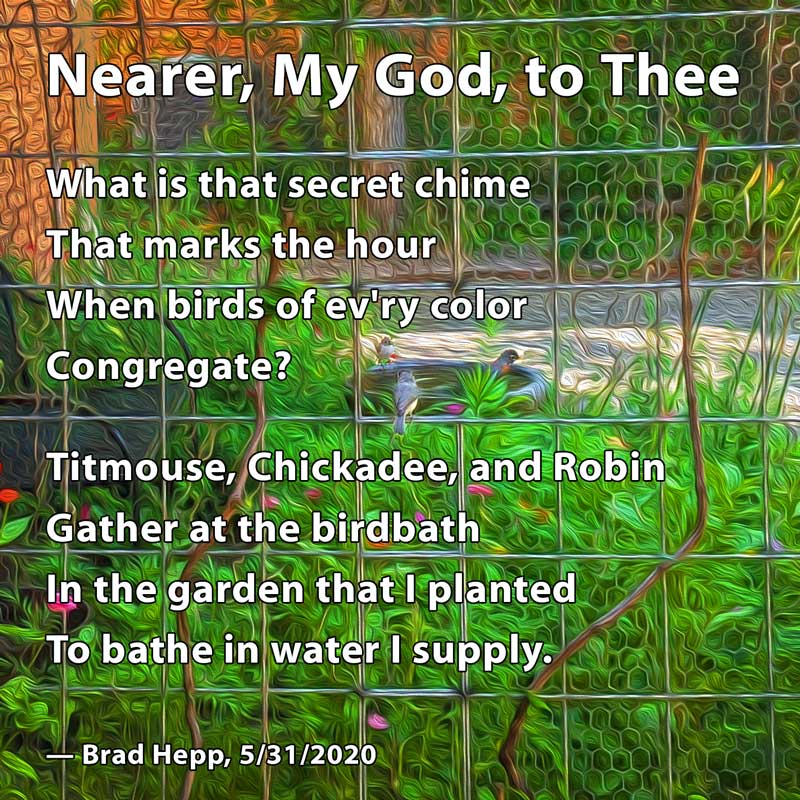
The background image is a stylized photo that I took from my office window. There are times of day when several birds come to my garden. I haven’t figured out why the various species pick the same time, but they do. Almost always, the titmouse and chickadee couples come at the same time. And when they come, they are often joined by a cardinal couple. Is there a certain light or temperature that is just right? I don’t know. Thus the question: “What is that secret chime?”
I titled this “Nearer, My God, to Thee” because the pleasure that I take in the variety of birds who congregate in my little garden must be akin to the pleasure God takes when people of every nation peacefully enjoy the world he created.
That life should get progressively better, and satisfactory here and now is illusory. We are exiles, who learn our condition slowly, if at all.
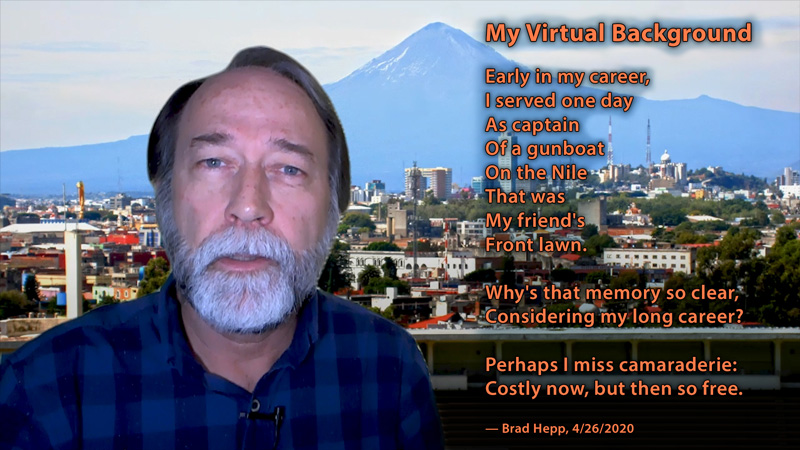
This week, I got to do the scripture reading for our church’s virtual worship service. The passage was 1 Peter 1:1-2. That’s a short passage, easy to read. But when my pastor indicated that he liked the idea of a personal introduction, I had an extremely hard time recording it. Thinking about what it means to be an exile, and the hope we have — given God’s kind plans for us — I was overwhelmed with a mixture of sadness, hope, and thankfulness. I’d get to “according to the foreknowledge of God the Father” and stop the recording, because I just couldn’t go on. By the way, the background image above is a frame from the reading when I finally got hold of my emotions.
Thinking of my birth city in another land brought back memories last night, and I had to work them out in a poem this morning.
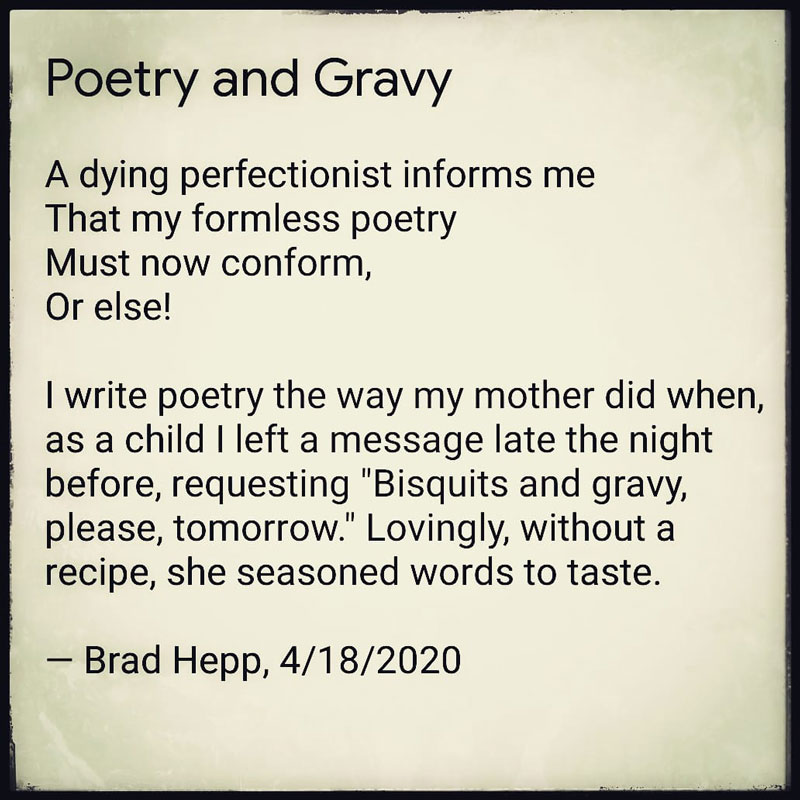
I’m not sure if Mom ever actually wrote poetry. She definitely was a terrific story teller, which hundreds of now grown-up kids can confirm. And she wrote tight accounts of her childhood, and of God’s remarkable provision for our family over several generations. She was skilled at oil painting, and flowers were always happy to grow for her.
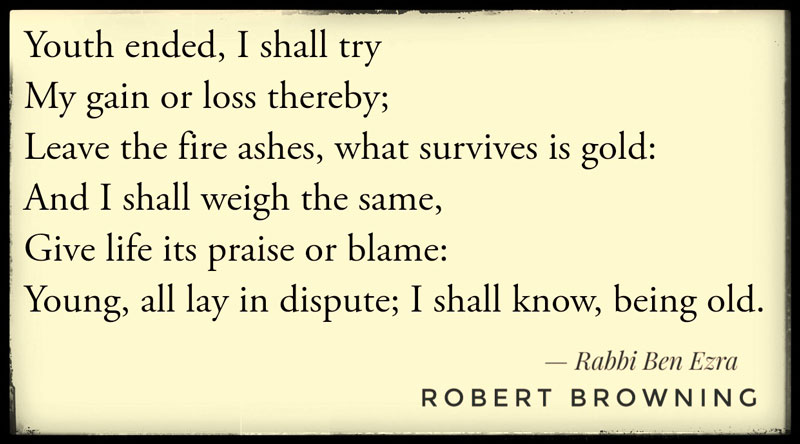
The reference to a “dying perfectionist” is self-referential. I usually refer to myself as a “recovering perfectionist.” It’s a gift and curse I inherited more from Dad. He and I enjoyed discussing Robert Browning’s difficult “Rabbi Ben Ezra.” We never discussed the kind of loose-form poetry that I write. Would he approve? I’m not sure….
Back to Mom. She was an artist. Truly. I grew up understanding that she had a gift I will never possess (although she, like other artists would insist that I could possess it, if only I tried).
My work on poetry has been an attempt to reach honestly into my heart, and then to express clearly what ugliness and beauty that I find. Bacon grease, milk, flour, salt and pepper…. Stir, but not too much. The gravy emerges, slightly different each time, but always a perfect complement to homemade bisquits.
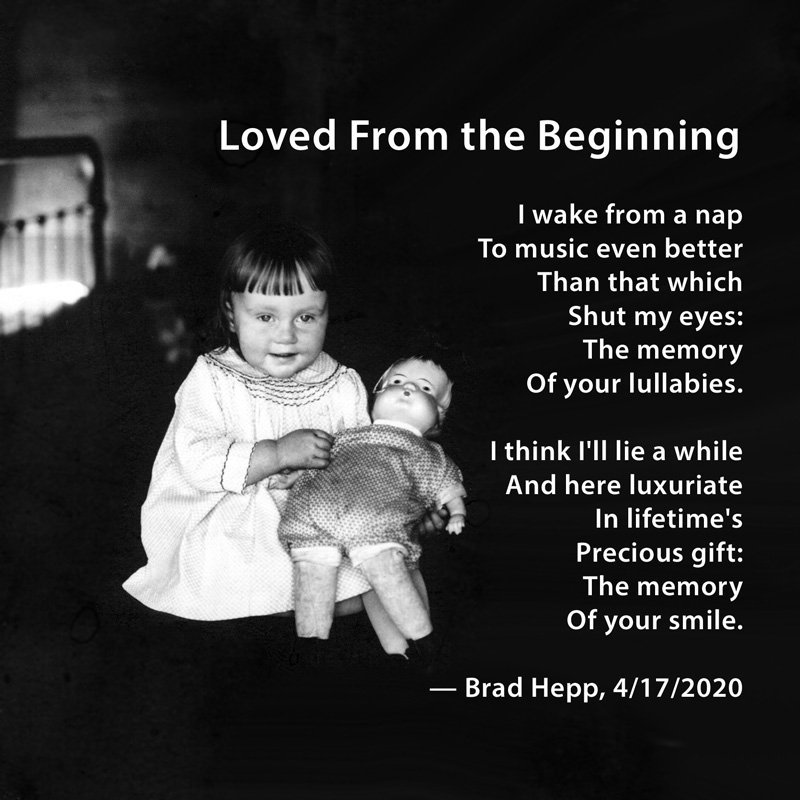
You should probably never ask me to TALK about this little poem… too emotional! The background photo is of my mother when she was a little girl. The photo was taken in the early 1930s. Mom was taken in 2006. It occasionally becomes obvious that I’m not through grieving.
The setting when I thought of the words really was waking up from an afternoon nap. As is often the case, I was wearing ear buds, and had been drowning out the noises in the house by listening to one of my favorite Pandora stations. As I awoke, I was keenly aware of how beautiful the music was… something from Pat Metheny.
I listened to another piece, and then another. Each was as beautiful as the last.
My mind went back through the years to the experience of taking naps as a child, to the awareness of family in other rooms, their voices becoming distant and indistinct as I fell asleep. I cannot actually remember anything before that. However…
Traveling back in time, I arrived at the conviction that my exquisite experience of beauty — here in music — has always been rooted in the love of my mother. She herself was beautiful. She loved me, and she loved beauty. But she also pointed me farther back, to the Author of beauty.
Farther Back
Time did not begin with my birth. When a Christian like myself refers to “love from the beginning,” he or she inevitably alludes to our belief that God has loved his children and had kind purposes for them “from the beginning.” When the Apostle Paul writes about this, he gets into one of the long run-on sentences (in the Greek) that signal his excitement:
Blessed be the God and Father of our Lord Jesus Christ, who has blessed us in Christ with every spiritual blessing in the heavenly places, even as he chose us in him before the foundation of the world, that we should be holy and blameless before him. In love he predestined us for adoption to himself as sons through Jesus Christ, according to the purpose of his will, to the praise of his glorious grace, with which he has blessed us in the Beloved. In him we have redemption through his blood, the forgiveness of our trespasses, according to the riches of his grace, which he lavished upon us, in all wisdom and insight making known to us the mystery of his will, according to his purpose, which he set forth in Christ as a plan for the fullness of time, to unite all things in him, things in heaven and things on earth.
Ephesians 1:3-10 (ESV)
I’m convinced that knowing the Creator, and being confident that He loves me, enables me to better appreciate the beauty of His creation.
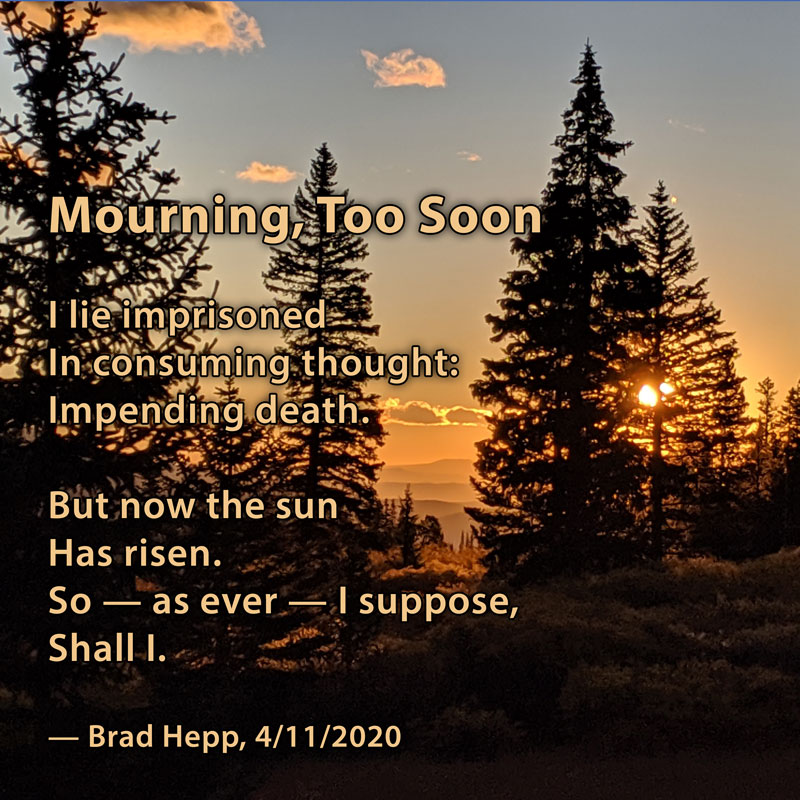
I jotted this down yesterday morning after a sleepless night, one where an admittedly minor ailment was reminding me of what took the lives of my parents. I’d have posted it yesterday, but ran out of time. Now, as I post this, it is Easter.
If you see ambivalence, mixed with annoyance, mixed with underlying hope, you see well. Hopefully, my reading of the poem (above) will reveal the negative side of my feelings.
The background photo is one I took up in the mountains last year on a similar morning, after a similar night.
Here is an exchange I had with a concerned friend, when he asked about the ailment. After describing the ailment, I wrote:
So, the poem was written out of fear and mild exhaustion, but with the realization that I was not acting in the full hope that often moves me. It’s full of double meaning.
Darol responded:
Yes, the middle of the night amplifies our fears and disappointments. I tell myself that the daylight will scatter them, and that they will end forever in that eternal morning.
Last Fall was a revelation. I thought, like a friend had said, that I had “…about covered it all.” I had been taking photographs of wild flowers around the lake for several months. Now, everything was beginning to die, to dry up and shrivel. What was left to photograph? Then I looked deeper. I decided to focus on what was becoming of the flowers I had photographed. That’s when I came to the realization voiced in the poem above.
Yesterday, I observed a photo someone recently posted for their parent, and a subsequent video. The aging that happened between the photo and the video was marked. Then I looked in the mirror, and the opening lines of this poem popped into my mind!
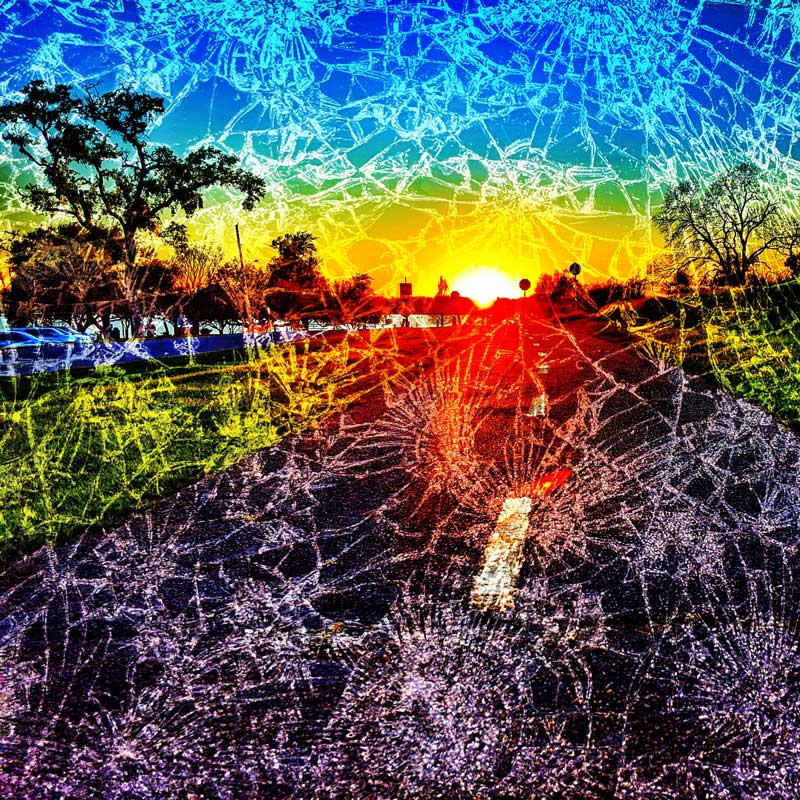
On a rainy day walk around the lake, I came across a smashed-up smartphone. It had no identification on it, and wouldn’t power on after charging, so I gave up on trying to find its owner. However, I did notice that there was a pretty interesting reflection when I turned the phone just right. I initially tried to take a picture of that, but gave up. Instead, I took this straight-on shot:
I decided to see if that could be layered over an older shot that I took near the Bath House:
I boosted the saturation of the above shot with Snapseed on my Pixel 3a phone:
Then, I used the double-exposure tool in Snapseed to combine the broken screen shot with the super-saturated sunset.
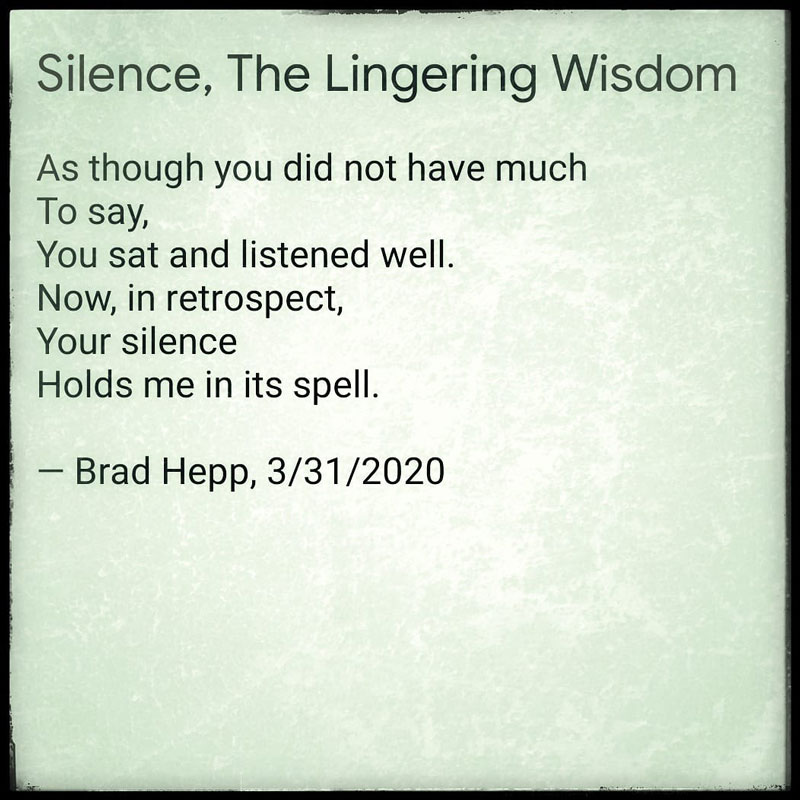
This was prompted by a handful of memorable experiences, mainly when I was blabbering, and my listener was not.
[March 31, 2021 Update] Recently, I have had many occasions to revisit this pleasant reflection. I have several friends who are considerably smarter and wiser than me. That’s not surprising. What IS surprising — and endearing — is the courtesy these friends extend me in conversation. When we’re talking, they don’t interrupt me, or they quickly apologize if they do. They sit there and LISTEN as I “think out loud” and then they have the patience to let time heal the wounds in my thinking. Such people, I can’t help but love and admire. God make me more like them!
[September 16, 2023 Update] I often come away from conversations with my best friends amazed at their courtesy. They’re my best friends largely because they are smarter and wiser than me. I VALUE what they have to say. But because they are courteous, they generally listen without interrupting. These friends are the very people I wish would interrupt, but they don’t.
Yesterday, I had an encounter of a very different sort. I introduced myself to a patron at the library. We began what I thought was going to be chit-chat. But it turned into very little chit and a whole lotta chat. She had much to say. Every time I opened my mouth to comment, she’d say “Hold on!” and keep holding forth. After two or three such “zip-its” I literally put my finger on my lips so I wouldn’t be tempted to turn her diatribe into a conversation.
Since I didn’t really have anything I felt compelled to say, the whole thing amused me. I served her by listening… on her terms for sure.
Incidentally, the poem in this post was inspired by a conversation with my friend Sten-Erik Armitage. He was my pastor at the time. He’s still a friend to whom I sometimes send raw poems, when I fear posting them to the general public. Such a friend is priceless!
I recently began listening to the Audible recording of Augustine’s “Confessions.” Last night, before falling to sleep, I was watching a lecture by James K.A. Smith on “Augustine Our Contemporary.” Just as I got too sleepy to watch anymore, he was talking about authenticity, and how that resonates with modern thinkers.
So, when I woke up this morning, my mind went immediately into writing this poetic response. The subject occupies a large part of my thinking. What is real in my everyday behavior, and what is fakery? By God’s grace, I believe there HAS been progress in becoming sincere, authentic, genuine. But the cost of that transformation is a clearer view of what remains untransformed.
Side Note on Pain and Pleasure in Writing Poetry
Writing poetry is a strange activity for me. My recall of language is spotty. In fact, it would be rare for me to be able to quote even one of my own poems. I look back on them and wonder, “How did that come out of my feeble mind? I can’t put the words together now; how did I do it then?” Words are often just beyond reach. Simple words. It’s a little painful. Just now, I needed to look up the video I reference above, and for a few seconds, I could not think of the word “YouTube.” If this had not been a weakness of mine since youth, I’d be worried.
So, you may be able to understand why writing poetry is a special pleasure for me. It is a small triumph, a pleasure to balance the pain of a language deficit. It is very much like the pleasure I experience in reading Scripture for a worship service, or even in recording my poems. There was a period in my life (Junior High through High School) when I had a speech impediment that interfered with smooth reading and speech. To be able to pull off a reading or recitation now without major hickups is a small triumph. It’s pleasure to balance pain.
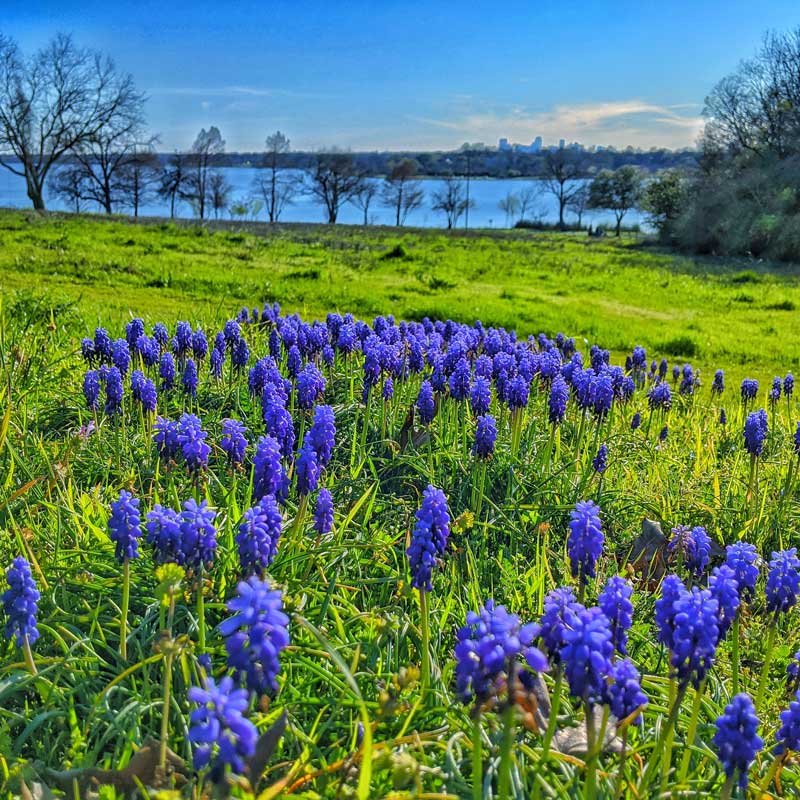
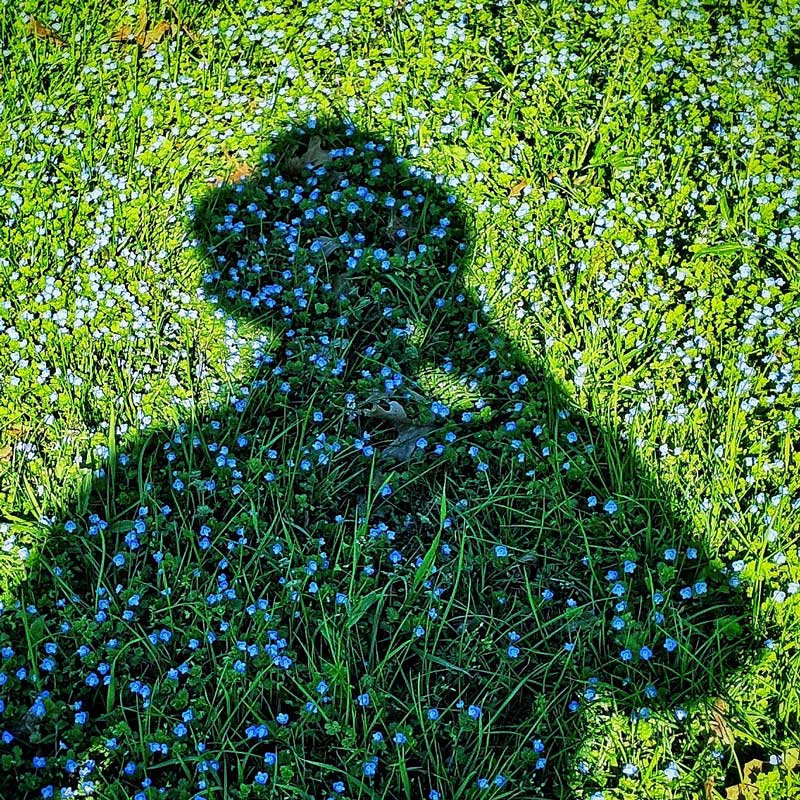
Often, I have to sit on the ground or lie down in the grass to get the best perspective for photographs. It always occurs to me that this is the view that little critters in the field have of the world around them. Do they appreciate beauty? I hope so.
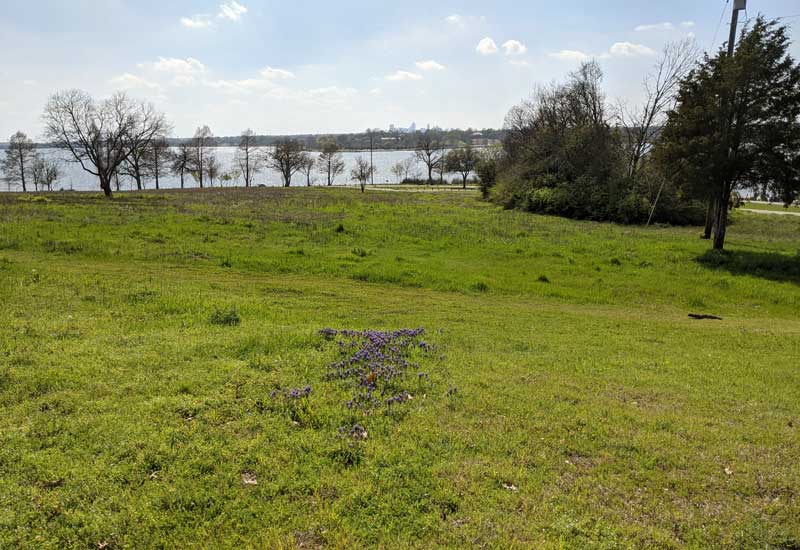
In the days since I took this picture, the grape hyacinths have really taken off in other areas around the lake. But I want you to see how small THIS patch actually is, so you can appreciate the importance of a selective point of view. Also, you’ll see that I pushed the post-processing of the image above pretty far (maybe too far). I was trying to isolate the colors in a late-afternoon shot. At that time of day, the light is very yellow, and to separate out the elements as our magnificent eyes do, I had to reduce yellow (increase blue). In any case, I was doing the post-processing on my phone, which isn’t always the best idea!
The red bridge beside Garland Road, just south of the Arboretum, is an excellent place for spider webs. It’s just a little tricky to get the smartphone aimed and focused right.
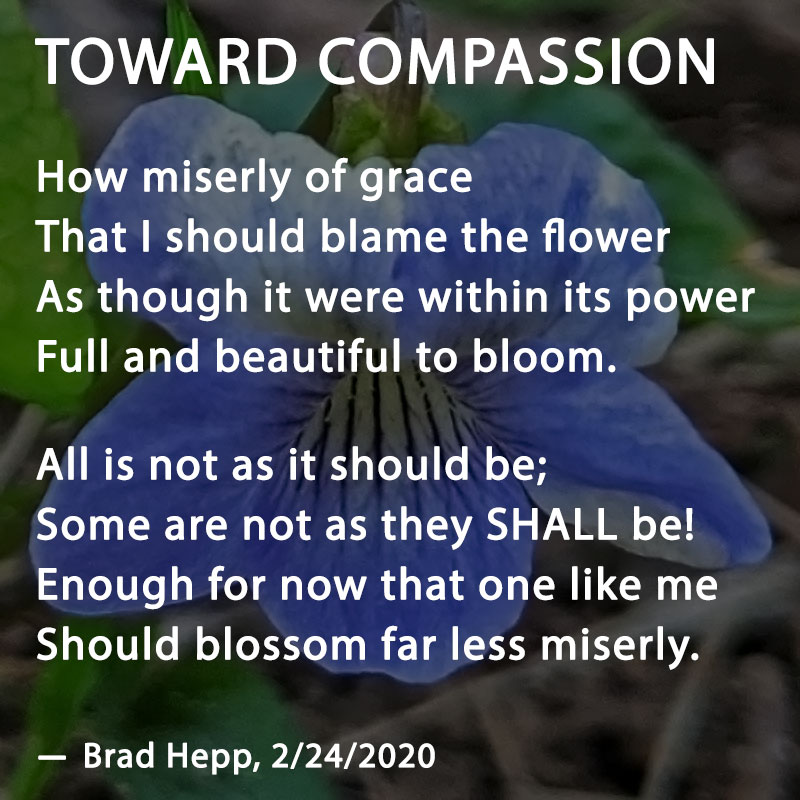
This poem is about judging others harshly, and the need to deal with my lack of grace.
“Miserly of grace” I may be leaning on questionable grammar here. The point is that I am being miserly in my exercise of grace.
“That I should blame the flower” This poem is about my attitude toward people, not toward flowers. But I draw on the analogy of judging flowers harshly. Ridiculous, huh? If I can see the folly of that, maybe I can extend the lesson to my harsh judgment of people.
A NOTE FOR THE CONTRARIAN: You may ask, “Don’t people have more control over their own behavior than flowers do over how well they bloom?” Yes and no. Since we have a will, we can choose to make progress in the refinement of our behavior. But progress can be slow. We all have backgrounds that predispose us to failure in particular areas. For example, a person who was abused as a child may WANT to be more trusting of their friends and partners, but the channels of mistrust run deep. We ALL have deep-rooted emotional baggage. Some of it results in easily-recognized behavioral problems. Some of it results in masked arrogance (or is that the mask of arrogance?).
“Some are not as they SHALL be” This line moves from the universal problem of a fallen creation (flowers and people) to a smaller set of people. Who are they? It refers to those who trust in Jesus Christ. They expect someday to be resurrected with a glorified body — and mind! — similar to what He has. Now, they are frustrated in their attempts to be better people. Then, their limitations will be lifted.
“Enough for now that one like me” Here, I look in the mirror. If I insist on judging and demanding change, I should demand it of myself.
“Should blossom far less miserly” Back to the flower metaphor…. If I’m going to judge how flowers — and people — bloom, I should make sure that I am blooming well, that I am being generous with grace.
Only in the shadow Was the yellow light Sufficiently subdued For us to welcome Beauty unforeseen.
— Brad Hepp, 2/22/2020
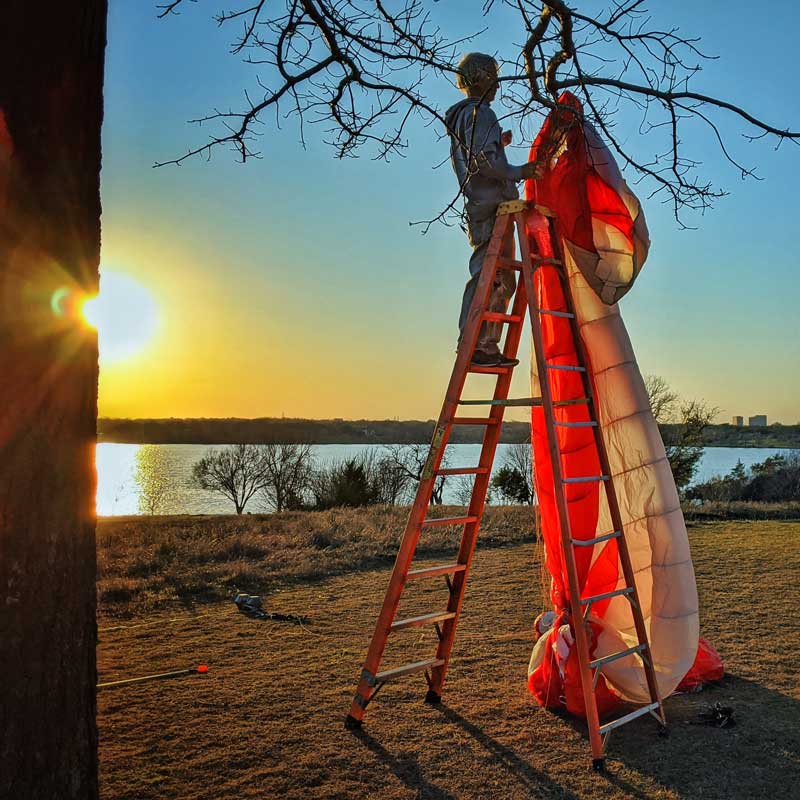
There, now I have tied this to the conversation I was having with a friend when I took the photo. We were pondering how weakness and inadequacy may actually be celebrated as part of the suffering that precedes restoration and exaltation in the Divine economy. See James 1:9-18
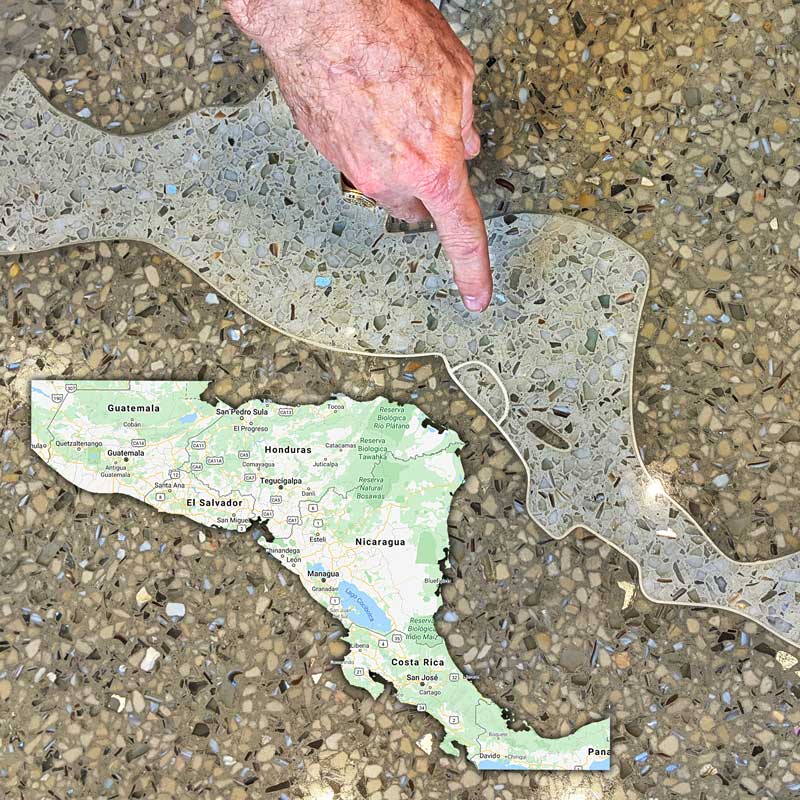
Today, the Director of the World Missions Center at SWBTS in Fort Worth gave me a great tour of the campus (we’re collaborating on a book for use in Brazil). One fun little thing: in the main foyer of the World Missions Center, the floor is a large map of the world with one color of terrazzo for the land masses and another for the oceans. Dr. Ray pointed out that there are no borders represented EXCEPT for that representing the country of origin of the floor construction foreman: El Salvador. As a lover of maps, I couldn’t help but appreciate this one! I have superimposed a map from Google to show that he was almost on the money (unless he’s actually from western Nicaragua!)
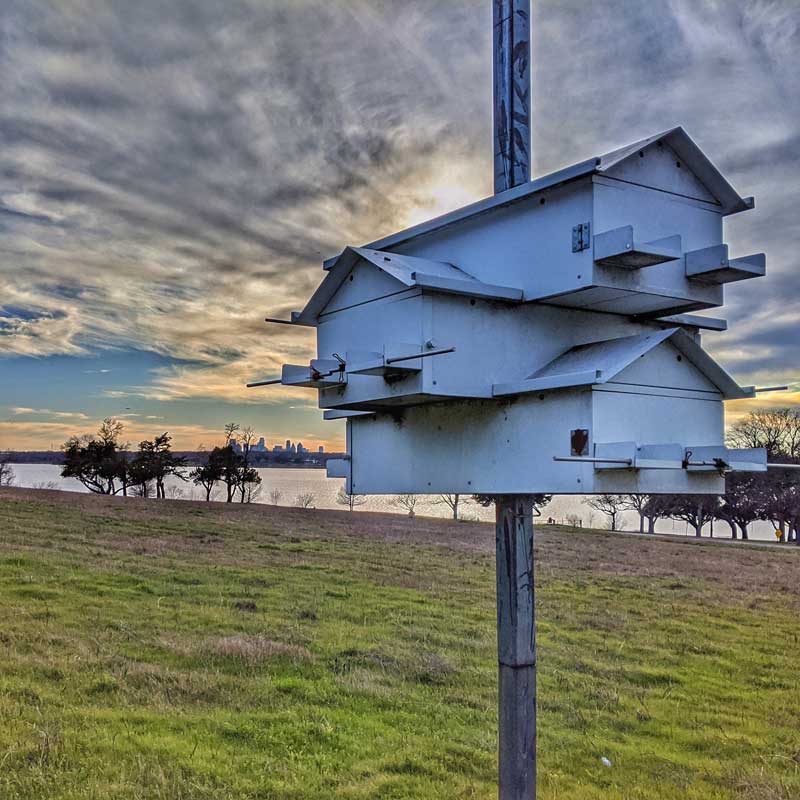
Today, I met Coco, the friendly lady who maintains these Purple Martin houses. She calls herself the “landlord” of the 24 apartments (on two poles). I’ll try to meet her again when there are some baby birds to photograph.
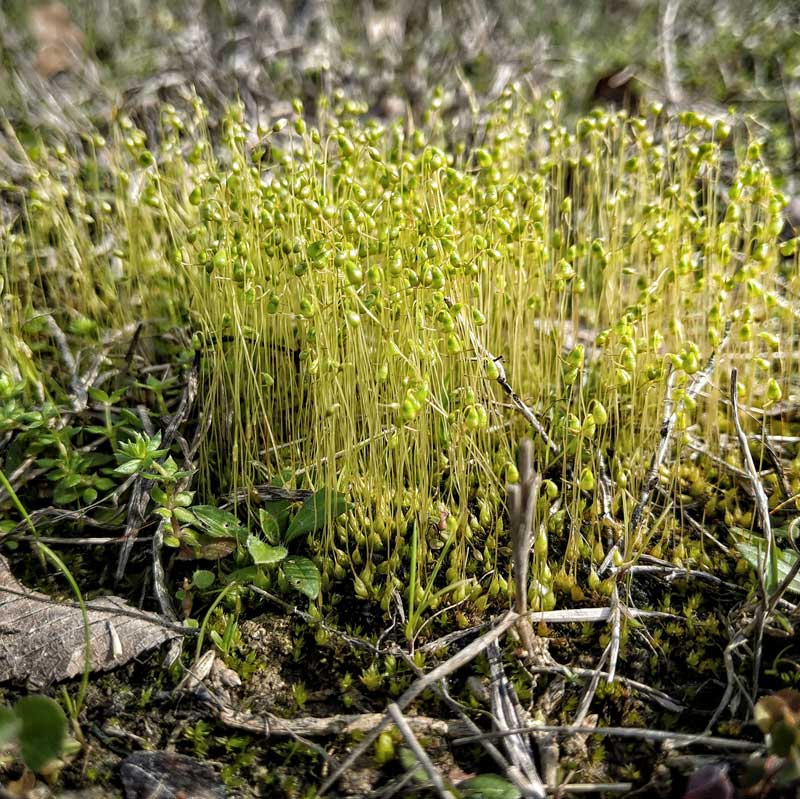
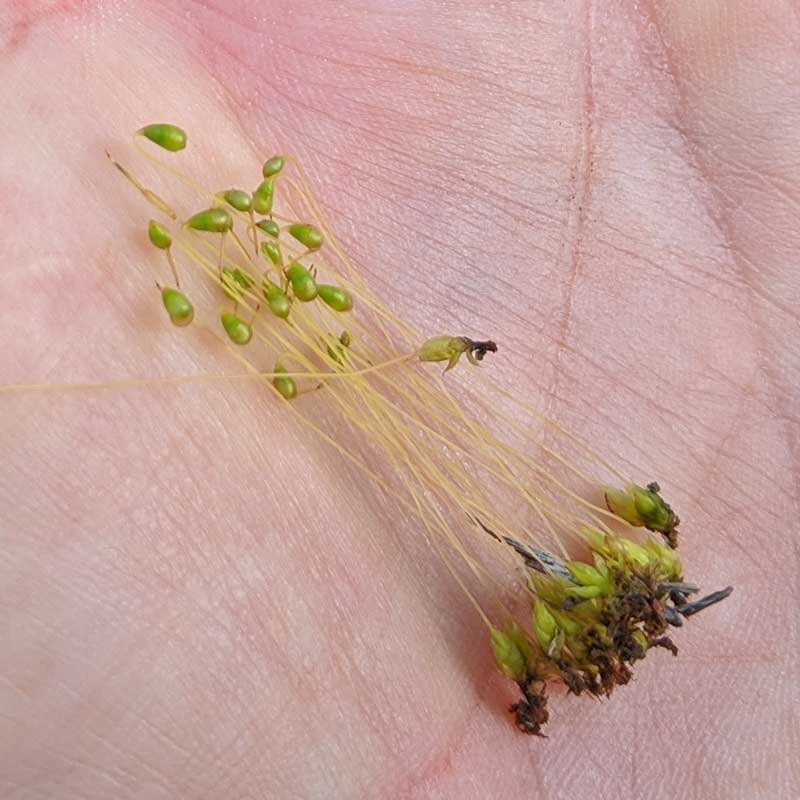
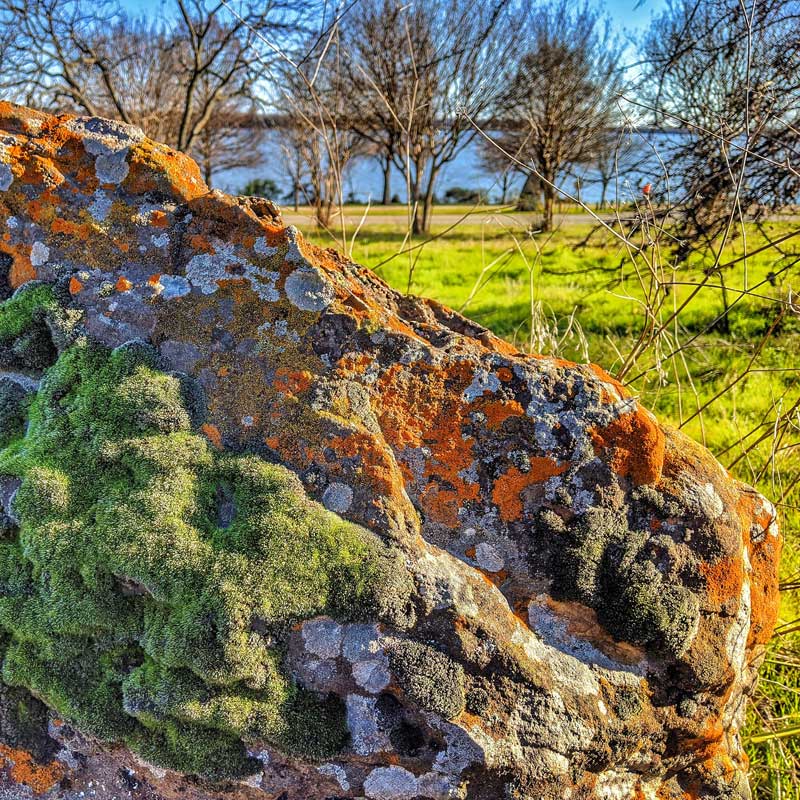
Possibly “Golden Thread-moss” See second photo (below) for size. These are remarkably tough. I’ll have to “liberate” some for my moss garden if I can find a patch in a location where they’ll never be missed.
Actually, in the careless way I built this poem, I WAS THIS GUY. I can do better with my poetry — and occasionally do. The almost comical reality in my life is that practically every time I point to “someone else’s” failings, it is my own failing that quickly comes into view. I have seen this so often when criticizing grammar! Point out someone else’s poorly-constructed sentence, and I’m sure to blunder within two or three of my own sentences.
I’ll never forget the illustration my friend Jim Adams gave us for the blemished sacrifices passage in Malachi. He brought the class a big bouquet of wilted flowers. That was over thirty years ago. That’s how good a teacher he is!
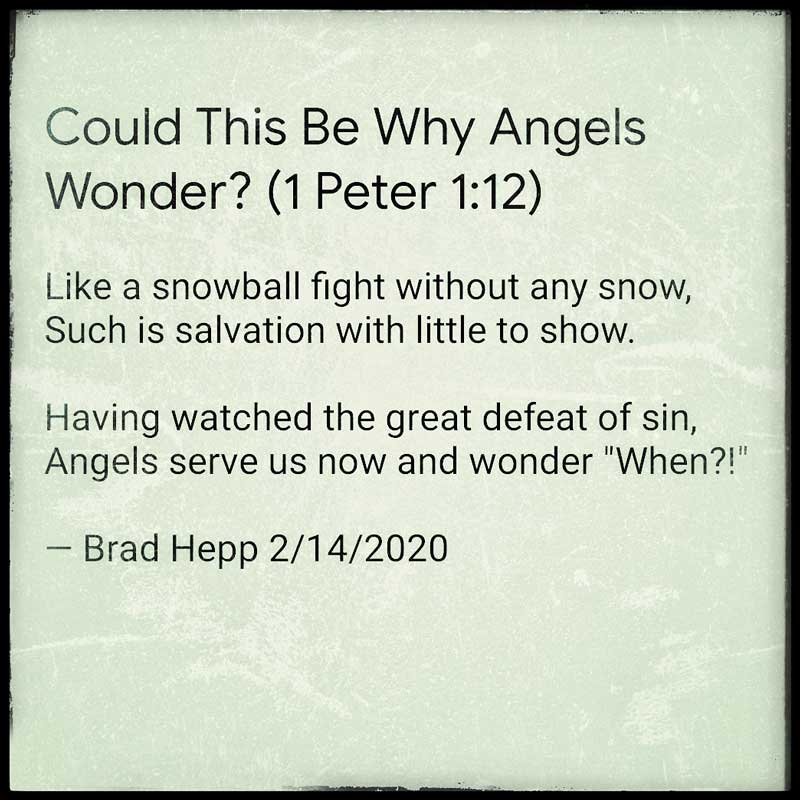
I didn’t get much sleep last night, pondering thoughts that wouldn’t pass muster in Angelology 101: Imagine for a moment the possibility that angels don’t possess our (humans’) imagination…. How odd we might seem to them. We philosophize, rhapsodize, and consistently compromise, imagining all along that thinking counts as doing, believing as obeying.
I guess every poet comes up with this one eventually.
This “poem” is not silly. In fact, I have never been more serious or intentional in anything I have written. It is not that I have no thoughts. Nor is it that I don’t want to share my thoughts with others. It is that there is no such thing as thoughts I have while “alone.” It may drive me to insanity, but I am determined to become consistent in my belief in an all-knowing and very present God. One of the worst hidden hypocrisies in my life has been holding the belief that I have “the ear” of the most powerful being (God) but not voicing my thoughts about others to Him. How many times I have scrolled through Facebook and thought this or that about my friends and acquaintances without “voicing” those thoughts to the One who can do something about my concerns? Do I see someone who is filling his or her life with hatred? Why would I not voice my concern about that to all-powerful God, the one best able to teach them love? Do I see someone hurting and reaching out to friends for comfort? Why would I not voice my sympathy to the great Comforter? Hypocrisy is usually associated with action. My hypocrisy has consisted of inaction.
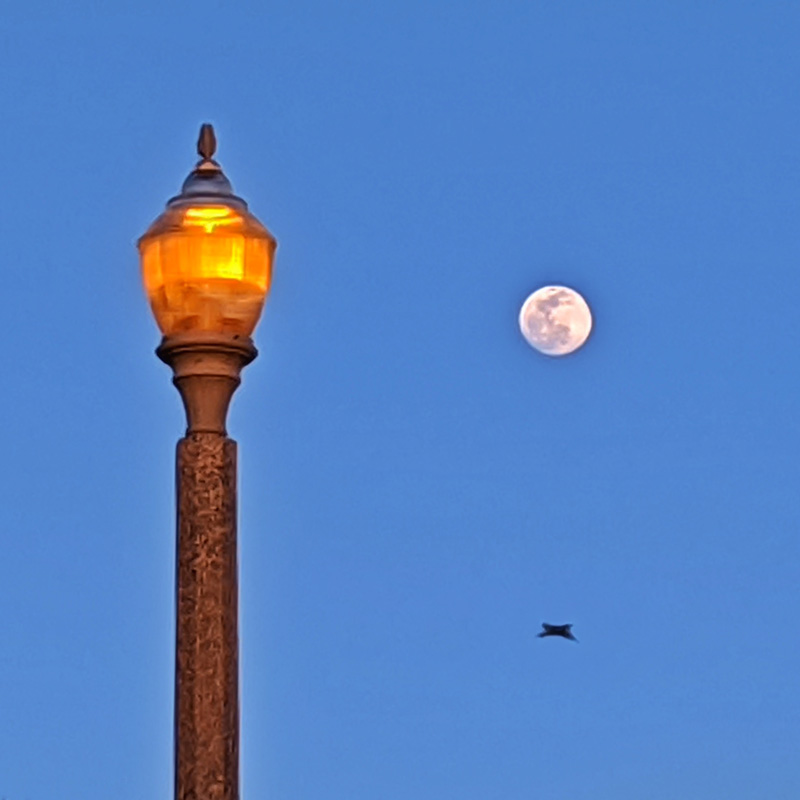
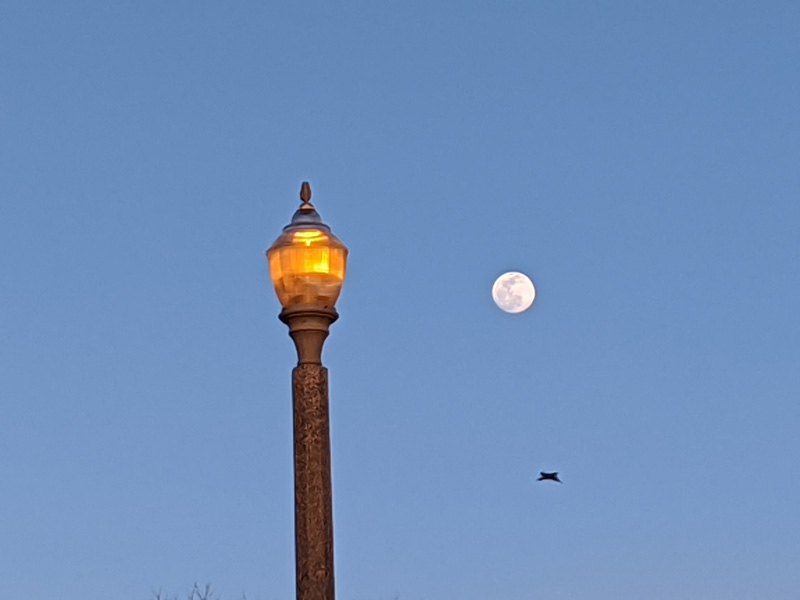
I was zoomed in as much as I could on my smartphone (Pixel 3a) when I took the above photo. Even though I had just been watching a flock of blackbirds, I didn’t notice this one flying in and out of the frame when I pressed the “shutter release.” Later, when I went to edit the shot (and crop square for Instagram), I just couldn’t resist my perfectionistic urge to move the bird exactly under the moon. I did that with the cloning tool in Photo Editor on my phone. All of the other tweaking (rotation, deepening of sky blue, extra contrast) was done with Snapseed.
It’s Monday, February 3, 2520. The Storyteller has invited me to grab coffee with Himself and one of my old enemies. It’s not the first time this has happened, so I know what to expect.
An angel serves us coffee and the Storyteller tells him, “Pull up a chair. This one involves you.”
“As you know, Brad, I have invited an old enemy of yours. He should be here shortly. In the meantime, how about that view!”
It’s the view I used to describe to my son: “When you grow up, and make your first million, buy me a house in the hills. It should have a covered porch, and it should overlook a valley with tall mountains across the way.” Clearly, this location was hand-picked. Someone remembered!
About then, my former enemy shows up, guided by another angel. He looks around and flashes a sheepish grin. Apparently, this is not his first story.
After dismissing the guide angel, the Storyteller says, “Have a seat, John. You remember Brad?”
An angel from the kitchen brings out another pot of coffee and an additional cup and leaves them on our table. The Storyteller pours a cup for John, and then begins….
“Brothers,” he says to me and John; “And you as well,” He smiles at the angel. “It was 500 years ago. Brad here was praying, in that distracted way that always made me chuckle. He got to the part of his list that he titled ‘Difficult.’ I agreed with his title. Praying for his enemies was difficult for him. Hearing him pray was difficult for me! In addition to his distraction, there was always his struggle with bitterness. But he tried, and that pleased me.”
“John, Brad prayed for you. He asked the Father to grant you success in your ministry, physical, mental, and emotional health, and continued spiritual growth. Brad didn’t have a lot of imagination, so his prayers for you were usually along those lines. Now let me tell you how we answered his prayers….
The Storyteller goes on for several hours, with a tale totally out of proportion to the minutes I once spent in prayer for John. He includes the angel, pointing out how he was employed in answering my prayers.
A few cups of coffee later, He concludes, “So, that’s how Brad’s prayer moved Heaven and Earth in your behalf.”
Then He turns to me.
“Brad, come back tomorrow. I have also invited a fellow you probably don’t remember. But he remembered you, right at the top of his ‘difficult’ list. Boy, do I have a story to tell him!”
One of the few card games I recall playing in my youth was Authors. If I remember correctly, the object of the game was to trade cards until you had a full set of cards representing an author’s major works.
As a result of playing that game, I was a young nerd who could reel off the most famous writings of Louisa May Alcott or James Fenimore Cooper WITHOUT HAVING READ A WORD OF THEIR WRITING.
I also had collections of cards for identifying mammals, and a nifty rock identification guide. I tried to imitate my mother’s impressive knowledge of flowers and birds. I still am trying.
That was Phase One of an education, and it has lasted almost six decades. As Phase One draws to a close (I hope!), I find myself possessing a veneer of knowledge. It isn’t all bad. Knowing just a little about this and that opens the door for many useful and fascinating conversations. But sometimes I look back on a conversation and am embarrassed that I confused my Authors cards. To my creative writers group: “I referred to Nathaniel Hawthorne, when I meant James Fenimor Cooper!” Last night, I came home after a conversation and realized I had spoken of the Fifth Amendment, when I should have referred to Article Five. Scratches in my thin veneer of knowledge reveal the particle board below. I want more. I want better.
Phase Two of my education is going to take infinitely longer. I’m not a fast reader. And some things just take time to learn. For instance, it takes walking around a lake many times, over many months, over many years to know more than rudimentary facts about the plants and animals I observe there. I can’t help but think of the latter chapters in Job. There, God poses questions for Know-it-Alls regarding basic facts that weren’t listed on their mammal identification cards.
This is why I love eternity, and the infinitely creative God who enables Phase Two of my education. Piece by piece, over time without end, the particle board and its thin veneer will be replaced. I’ll come to really know.
It was a morning in the Fall of 1979. Sunlight, pouring in from my left, kissed the bark of giant pine trees standing by the path. They were silent that morning, as I walked from the cafeteria to my dormitory.
I had been up late the night before, working on a project for Cultural Anthropology 101: “Compare Groups of Students to Herds of Animals.” The comparison was unsettling.
“What if,” I had begun to ask, “there’s really nothing special about human beings? What if they don’t reflect a creative, purposeful God?” This walking from the cafeteria…. Was I a mere beast returning to my den after feeding?
The concrete path between the cafeteria and my dormitory was not straight. After all, the trees were here first. You don’t cut down magnificent pine trees just to make a path straight. “We were planted here by the Gardener. Respect Him!” That’s what the trees had always told me, as I walked the curving path.
But this morning, the trees were quiet, their low voices silenced by the unmoving wind. Instead, I heard unpleasant hissing. “Weeds. That’s all they are. Very tall weeds.” I did not like this voice. I did not like what it was urging. “Stop thinking of a garden. There is no Gardener. Weeds, only weeds.” I kept walking. The hissing went away, but for a terrible few minutes, I was lost on the path.
Forty years later, I occasionally hear the hissing. But usually, I hear the trees. They are not mere weeds. There is a Gardener. I walk through His garden. There, I encounter not mere animals, but would-be gardeners.
Cultural Anthropology 101 be damned.*
Commentary
I discussed this little vignette with my creative writers group, and they helped me tidy up the story. At least they tried. John Barbre suggested that I make a people/animals and trees/weeds parallel stronger by using the word “herds.” Since much of this vignette was crafted, and not something that literally happened, I felt free to use his excellent suggestion.
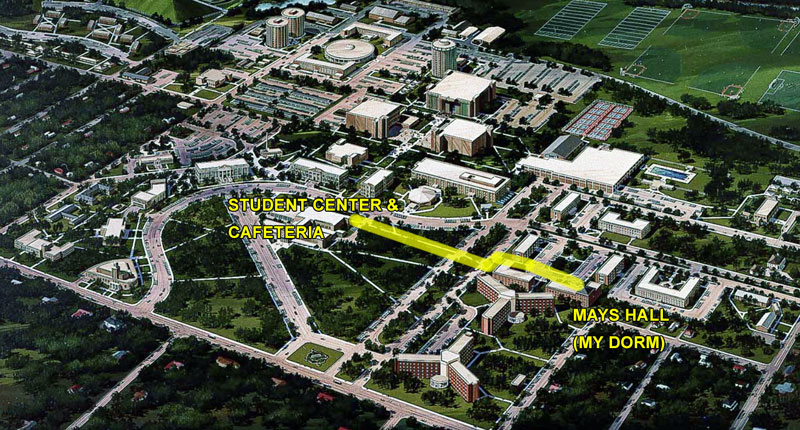
So how much WAS real? I have a photo below that shows an artist’s rendering of the SFASU campus about the time I was a student there. It looks like my memory of the “curving” path may have been made up (or the artist just liked straight lines!). Here are the elements that were factual:
It was about 1979
I was taking a cultural anthropology course that I took very seriously
I had begun wondering if Christianity was just a delusion
I did actually experience the disturbing perception that trees were mere weeds
I’m coming to realize that I do indeed perceive the world around me as bearing a Creator’s fingerprints. It almost sounds silly to admit that, especially as I continue to be fascinated by cultural anthropology, sociology, and their evolutionary explanations of man and his behavior. I know that my perception of the world would be explained by many as an activated “God gene” working overtime.
But consider this: if we really are designed by God (my operating belief), would it not stand to reason that He would have made us with the ability to perceive Him? Next time you are awed by beauty, ask yourself, “Could it be that I am responding to this with appreciation because I sense that there is design and meaning behind it? Is there something telling me that there really is a Creator? Do I dare listen to that voice? Or is there some hissing voice that insists I am not free to consider such fantasies?” Are you free?
*I don’t actually have a problem with cultural anthropology per se. Rather, it is the reductionism that it fires up in me, the tendency to think of a partial explanation of human behavior (esp. apart from man’s response to God) as the entire explanation.
Artist’s rendering of Stephen F. Austin ca 1976 (my path is highlighted):